








Definition properties examples and how to identify even composite numbers
Any number we come across can be either a ‘prime number’ or a ‘composite number’ based upon the numbers that are able to divide the given number without leaving a remainder. These numbers are known as factors.
So depending upon the number of factors, numbers are classified as prime and composite numbers. This classification becomes important in your higher classes as you will begin to deal with factorizations and other complex operations. Now to understand what are prime and composite numbers, odd and even numbers, and the uses of understanding these core ideas, let’s jump right in!

Introduction to Composite Numbers
What is a Prime Number?
Any number that is found to have only 2 factors can be called a prime number. In other words, any number that is divisible by no other numbers other than 1 and itself can be called so. Most odd numbers are mostly prime numbers in nature.
Examples of prime numbers are 3 (divisible by 1 and 3 only), 5 (divisible by 1 and 5 only), 7 (divisible by 1 and 7 only), etc.,
2 is the only even prime number, which is an interesting fact to note as every other even number is composite number
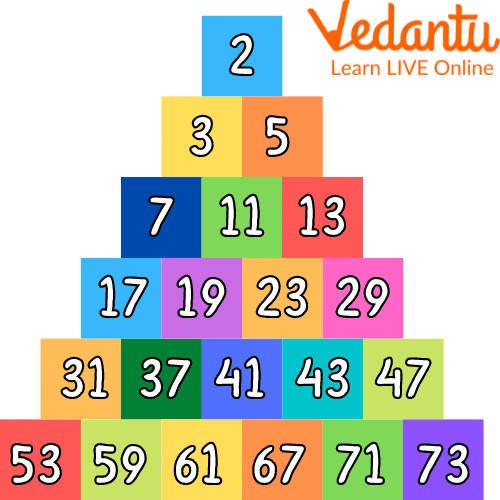
Prime Numbers
What is a Composite Number?
Any number that is found to have more than 2 factors can be called a composite number. In other words, any number that is divisible by numbers other than 1 and itself can be called so. Now to understand what is even composite number, most even numbers are mostly composite in nature, thus they obtain their name as even composite numbers.
Examples of composite numbers are
4 (divisible by 1, 4, 2)
6 (divisible by 1, 2, 3, 6)
8 (divisible by1, 2, 4, 8) and many more.
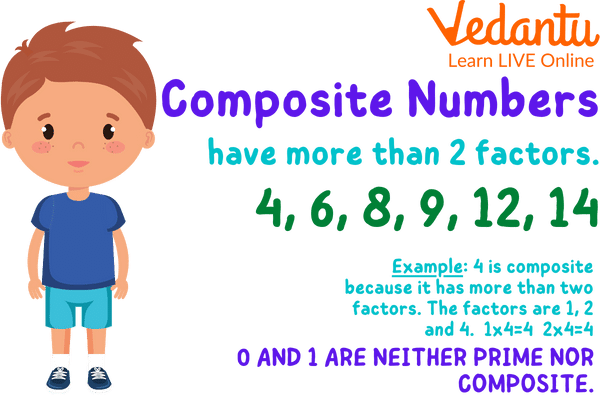
Composite Numbers
What are the Types of Composite Numbers?
Numbers in general are classified as odd numbers and even numbers, this classification holds good for composite numbers as well. Broadly composite numbers are of 2 types:
Odd composite numbers
Even composite numbers
Odd Composite numbers are odd numbers having more than 2 factors showing perfect divisibility. Examples of odd composite numbers are 9, 15, 21, etc.,
Odd numbers are mostly prime numbers except for a few exceptions which are odd composite numbers.
Even Composite numbers are even numbers having more than 2 factors showing perfect divisibility. Examples of even composite numbers are 4, 6, 8, 10, etc.,
Even numbers are mostly composite numbers except for 2, which is an even prime number.
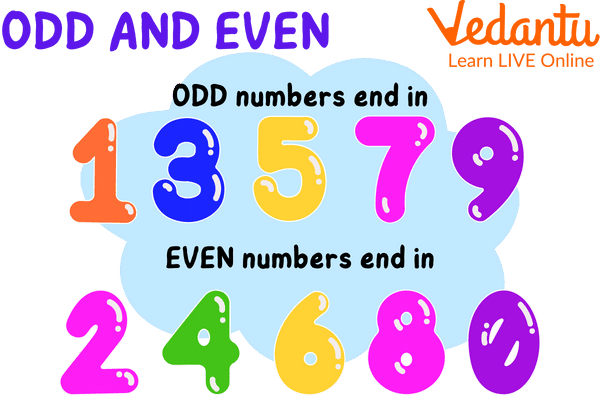
Odd and Even Numbers
Solved Examples
Q 1. Check whether 213 is a composite number
Ans: A fool-proof method to find if a given number is prime or composite is by listing out the given number’s factors. 213 has the following factors 1, 213, and 71.
Since 213 has more than 2 factors, it is a composite number.
It is an odd composite number
Q 2. Check whether 187 is a composite number
Ans: 187 has the following factors 1, 187, 11 and 17
Since 187 has more than 2 factors, it is a composite number.
It is an odd composite number
Q 3. Check whether 91 is a composite number
Ans: 91 has the following factors 1, 7, 13, 91
Since 91 has more than the 2 factors, it is a composite number.
It is an odd composite number
Q 4. Check whether 78 is a composite number
Ans: 78 has the following factors 1, 2, 3, 6, 13, 39
Since 78 has more than 2 factors, it is a composite number.
It is an even composite number
Q 5. What is a composite number?
Ans: Any number that is found to have more than 2 factors can be called a composite number.
Practice Problems
Q 1. Check whether 405 is a composite number
Ans: Yes
Q 2. Check whether 221 is a composite number
Ans: No
Q 3.____________ is the smallest composite number
Ans: 4
Q 4.___________is the smallest even prime number
Ans: 2
Q 5. Check whether 430 is a composite number
Ans: Yes
Summary
Numbers can be classified into prime and composite numbers based on the number of factors showing perfect divisibility. These are further classified as odd and even composite and prime numbers.
When a given number has not more than 2 factors which is 1 and the number itself, then it’s called a prime number. Examples are 2, 3, 5, etc.,
When a given number has more than 2 factors which is 1 and the number itself, such a number is called a composite number. Composite numbers can be further divided into odd composite numbers and even composite numbers, Eg., 4, 6, etc.,
FAQs on Even Composite Numbers in Mathematics
1. What are even composite numbers?
Even composite numbers are even numbers that have more than two factors. An even number is divisible by 2, and a composite number has more than two positive divisors (1, itself, and at least one more).
- Examples: 4, 6, 8, 10, 12
- 4 has factors: 1, 2, 4
- 6 has factors: 1, 2, 3, 6
2. Is 2 an even composite number?
No, 2 is not an even composite number; it is an even prime number. A composite number must have more than two factors, but 2 has exactly two factors:
- 1
- 2
3. How do you identify an even composite number?
An even composite number is identified by checking if it is divisible by 2 and has more than two factors. Follow these steps:
- Check if the number is even (last digit is 0, 2, 4, 6, or 8).
- Find its factors.
- If it has more than two factors, it is composite.
4. What is the smallest even composite number?
The smallest even composite number is 4. The number 2 is even but prime, so it is not composite. The factors of 4 are:
- 1
- 2
- 4
5. What is the difference between even prime and even composite numbers?
The difference is that an even prime number has exactly two factors, while an even composite number has more than two factors.
- The only even prime number is 2.
- Examples of even composite numbers: 4, 6, 8, 10.
6. Are all even numbers composite?
No, not all even numbers are composite because 2 is an even prime number. Every even number greater than 2 is divisible by 2 and at least one other number, making it composite.
- 2 → even prime
- 4, 6, 8, 10 → even composite numbers
7. Can you give examples of even composite numbers from 1 to 20?
The even composite numbers from 1 to 20 are 4, 6, 8, 10, 12, 14, 16, 18, 20. These numbers:
- Are divisible by 2
- Have more than two factors
8. What are the properties of even composite numbers?
Even composite numbers have the properties of being divisible by 2 and having more than two positive factors. Key properties include:
- They are multiples of 2.
- They are greater than 2.
- They can be written as a product of smaller integers.
- They are not prime numbers.
9. Is 1 an even composite number?
No, 1 is neither even nor composite. The number 1 has only one factor (1 itself), so it is not composite. It is also not even because it is not divisible by 2. Therefore, 1 is classified as a unique number, neither prime nor composite.
10. How are even composite numbers related to multiples of 2?
All even composite numbers are multiples of 2 greater than 2. A multiple of 2 is any number of the form 2 × n, where n is an integer.
- If n = 1 → 2 (prime)
- If n ≥ 2 → 4, 6, 8, 10… (composite)
