








How to Convert Fractions to Decimals Using Division Method and Examples
Image Shows that Learning Fractions and Decimals is Fun
Any number represented as a fraction is divided into two parts: the numerator and the denominator. In general, we divide the numerator by the denominator to convert a number from fraction to decimal form. Fractions are written as p/q, where q is not equal to zero. For example, A fraction can be compared to a pizza that has been cut into equal pieces. If a pizza is cut into 10 equal parts and 4 of them have been eaten, there are 6 parts remaining. We will say that 6 out of 10 parts are still available. Comparing fractions and decimals is a little difficult. Because both fractions and decimal numbers represent the same numbers, but they don't look the same.
Fractions
Fractions are a common way to represent partial numbers. A fraction is typically defined as a number of equal parts, such as "one half" and "two thirds." This is expressed as one whole number divided by another whole number. "Two-thirds" is written as \[ \frac{1}{3} \]
A fraction is a part of a whole number. A fraction is a ratio of the upper number (numerator) to the lower number (denominator). The numbers are vertically kept and separated by a bar.
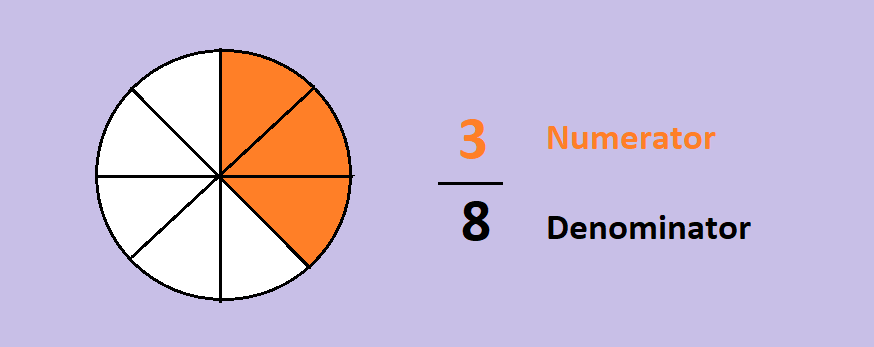
The Above Image Shows the Parts of a Fraction
Types of Fractions
Refer to the images below for different types of Fractions:
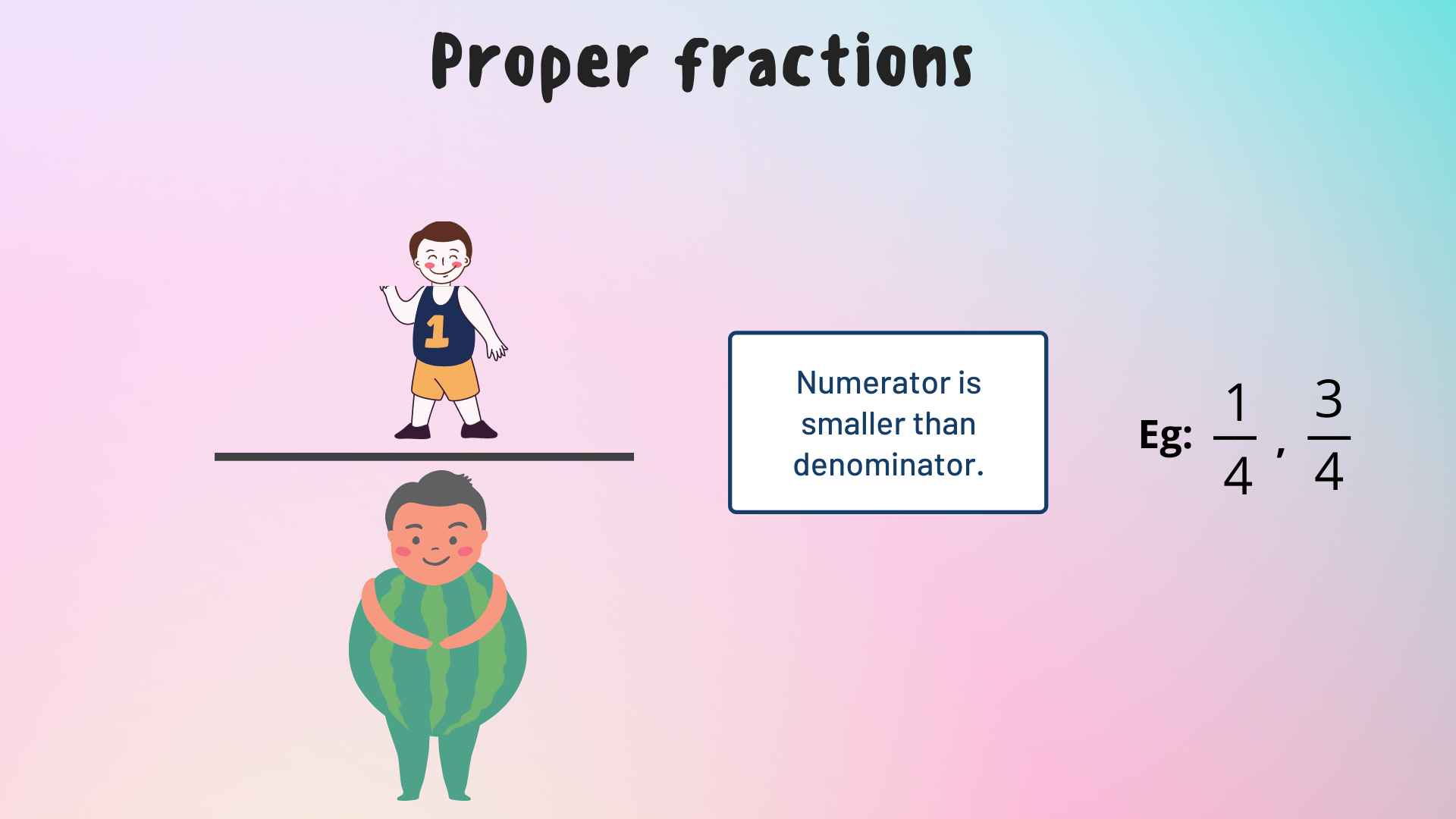
The Above Image illustrating Proper Fractions
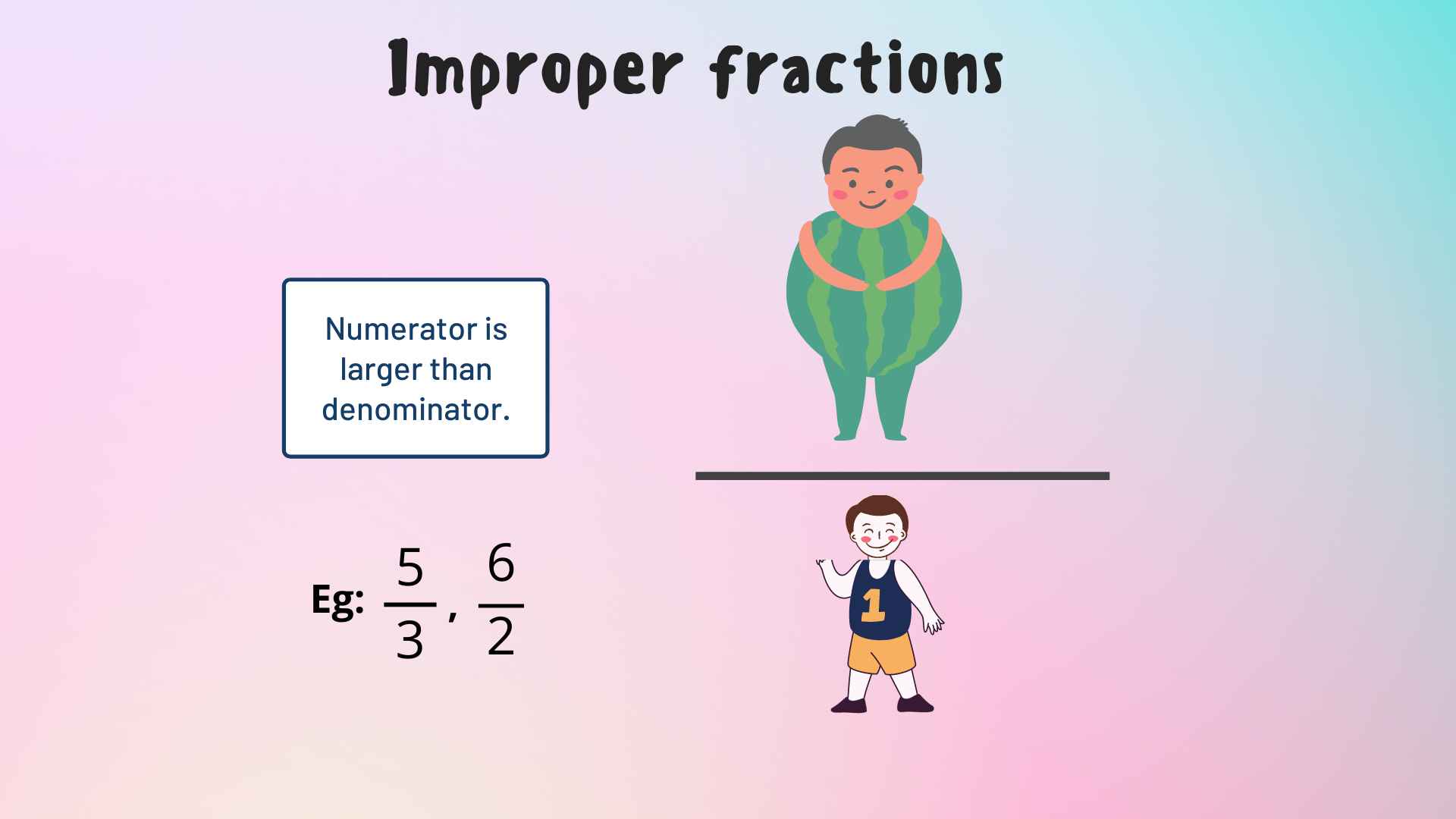
The Above Image Illustrates Improper Fractions
(Image will be uploaded soon)
The Above Image Illustrates Mixed Fractions
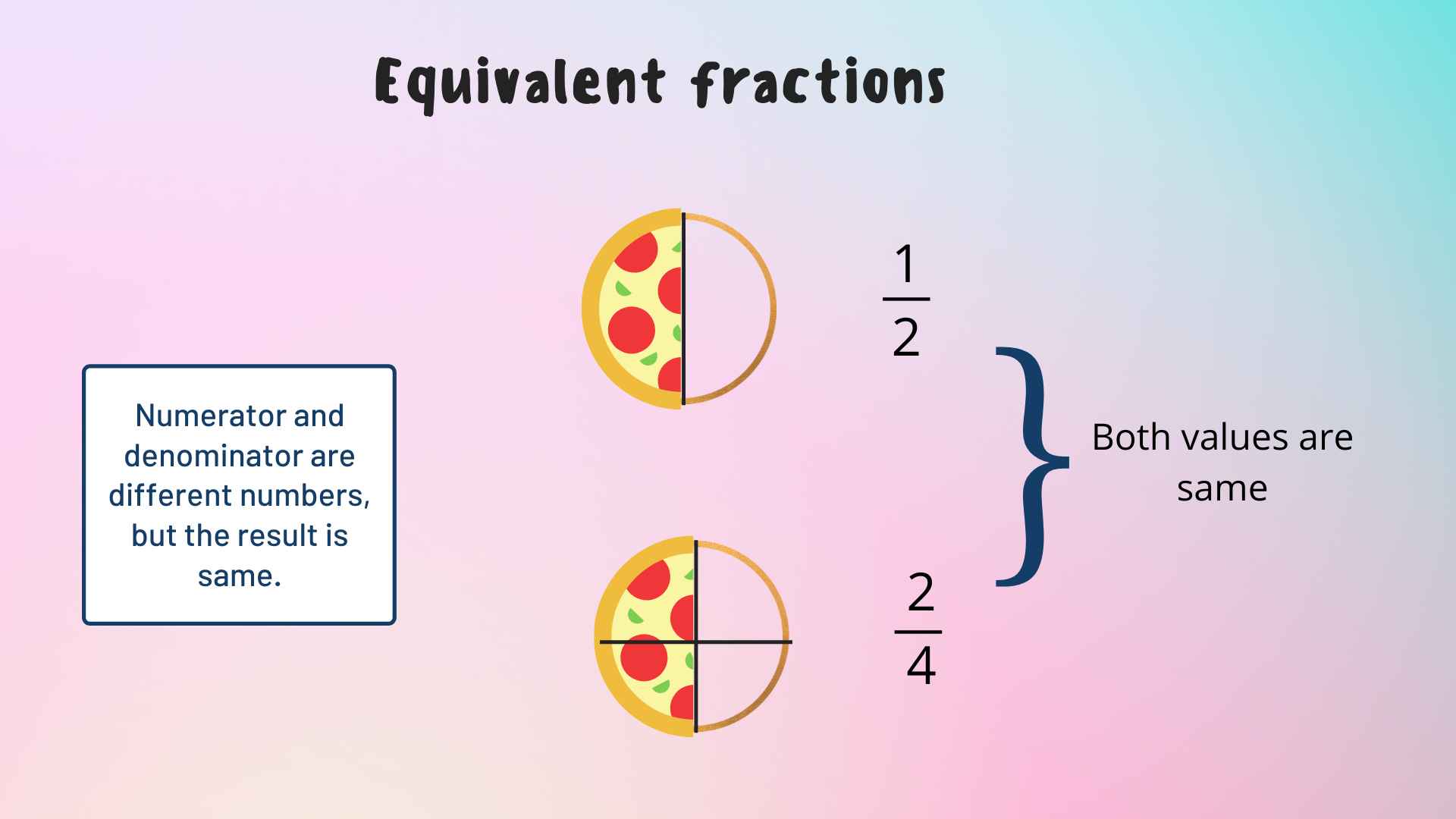
The Above Image Illustrates Equivalent Fractions
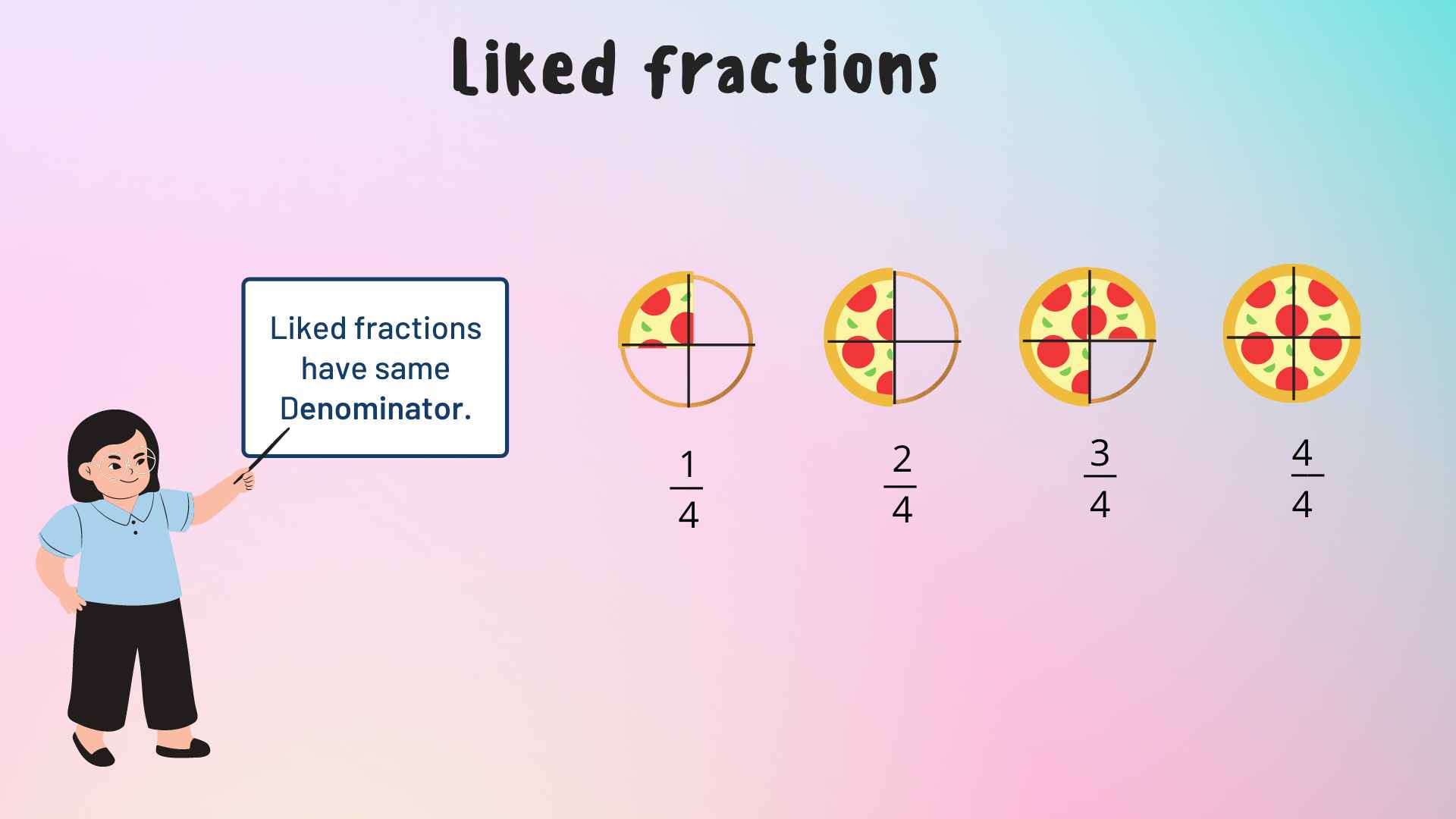
The Above Image Illustrates Liked Fractions
Decimals
The decimal number system is a positional notation that has a base of 10. It refers to numbers with a fractional part separated from an integer part by a decimal separator. Decimals allow us to write fractions without having to write a fraction with a numerator and denominator.
(Image will be uploaded soon)
The Above Image Illustrates the Parts of a Decimal Number
Decimal Place Value Chart
The position of each digit is important when writing any number. When we go to the right in the below place value chart, the value of the digit becomes 10 times smaller, i.e. one-tenth, and when we move to the left, the value of the digit becomes ten times larger.
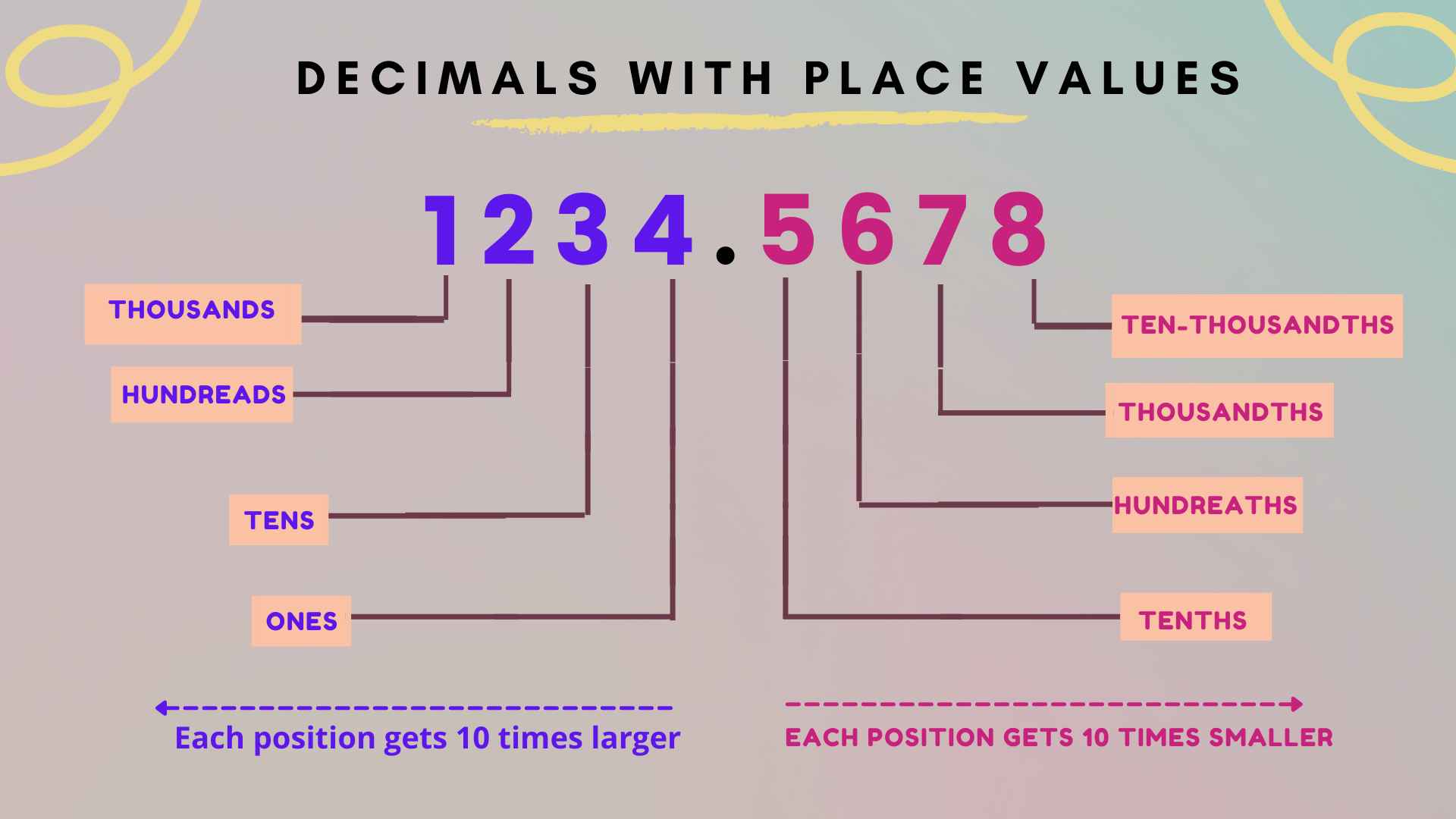
The Above Image Illustrates the Decimal Number with Corresponding Place Values
Fractions to Decimals
Simply divide the numerator by the denominator to convert the fraction to decimal.
4/10, for example, is a fraction. When we split it, we get 0.4.
(Image will be uploaded soon)
The Above Image Shows an Activity of Writing a Fraction and Converting it to a Decimal Value
Real-life example to understand fraction to decimal conversion:
Tara divides her A4 Sheet into 12 equal parts. She drew the fruits of different kinds on each part of the Sheet. Amongst the 12 slots, she reserved 5 equal portions for apples, 3 portions for oranges, and 4 for bananas. Let us write the portion given to fruits of different kinds in a fraction as well as in decimal form.
(Image will be uploaded soon)
Image Illustrates the Above Real-life Example
Apples are drawn in the 5/12 or 0.4166 part of the sheet.
Oranges are drawn in the 3/12 or 0.25 part of the sheet.
Bananas are also drawn in the 4/12 or 0.333 part of the sheet.
Examples
1. Convert 16/20 into decimal form.
Sol: To convert fraction to decimal, divide 16 by 20, and we get the decimal form.
Thus, 16/20 = 0.8
Hence, the decimal form of 16/20 is 0.8
2. Express 2.25 in fraction form.
Sol: The given decimal number is 2.25
The expanded form of 2.25 is
= 225 x (1/100)
= 225 /100
=9/4
Hence, the equivalent fraction for 2.25 is 9/4.
Fraction to Decimal Chart
The fraction to decimal chart is an easy way to get the converted numbers. The chart shows the decimal values of the most frequently used fractions. Fractions will be less or greater than one. Fractions less than 1 have a numerator < denominator. They are known as Proper fractions. Proper fractions have decimal values that are always less than 1. Fractions which have numerator ≥ denominator are called improper fractions. They have 1 or more decimal values. Let us see how the numbers would look when we convert fractions to decimal form using the fraction to the decimal chart shown below:
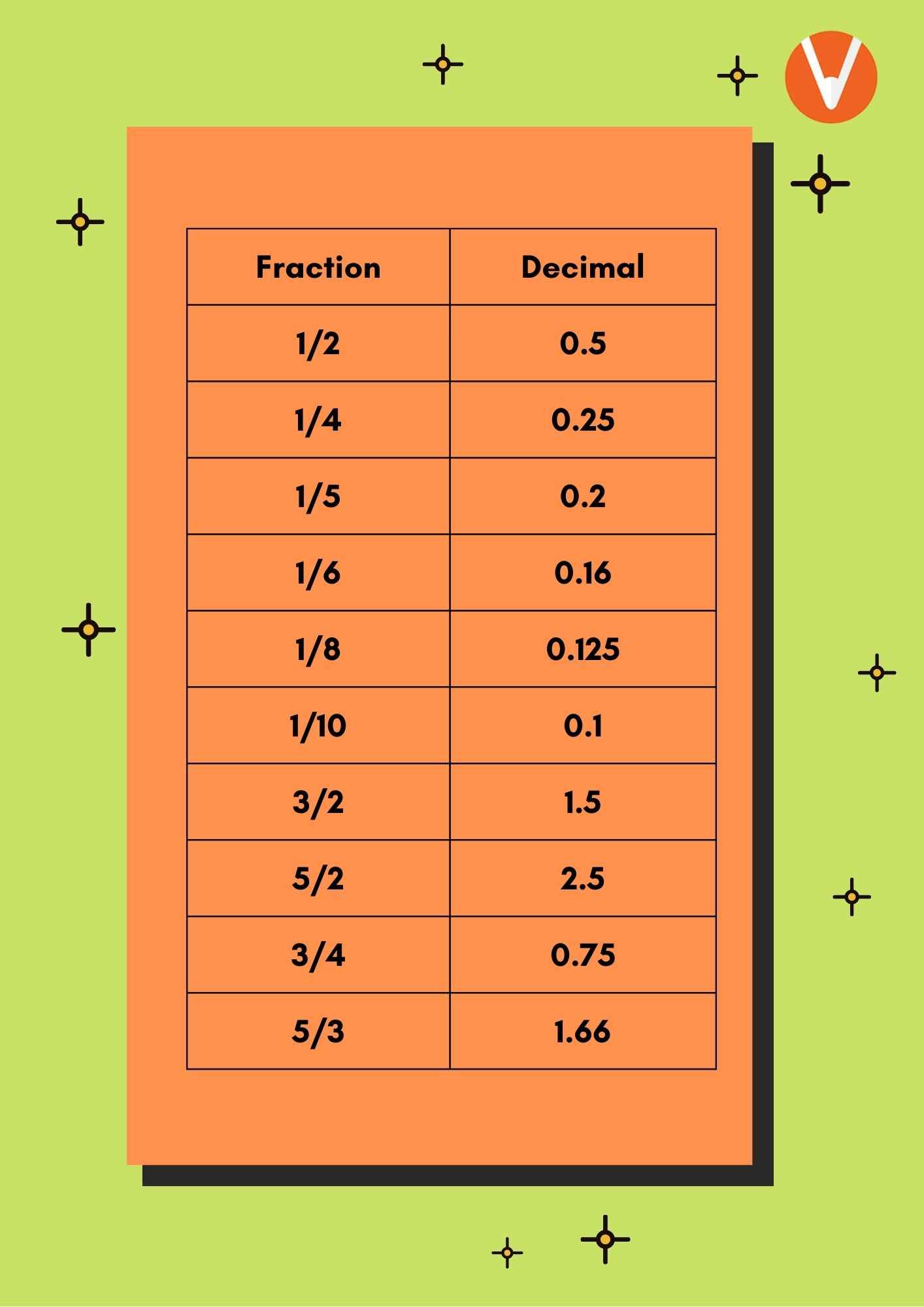
The Image Shows the “Fraction to Decimal Chart”
The main takeaway from this article is that decimals and fractions are various ways of describing the same thing, a number which is not whole.
Conclusion
Both fractions and decimals are used to represent parts of a whole; both fractions and decimals express a number less than one. In order to complete a maths problem, you may need to convert a fraction to a decimal. This concept has been thoroughly covered in this article.
FAQs on Conversion of Fractions to Decimals with Clear Methods
1. What is conversion of fractions to decimals?
Conversion of fractions to decimals is the process of dividing the numerator by the denominator to express a fraction in decimal form. In other words, a fraction is converted into a decimal by performing simple division.
- If the fraction is a/b, calculate a ÷ b.
- The result can be a terminating or repeating decimal.
- Example: 3/4 = 3 ÷ 4 = 0.75.
2. How do you convert a fraction to a decimal step by step?
To convert a fraction to a decimal, divide the numerator by the denominator using long division or a calculator.
- Step 1: Write the fraction as a division problem (numerator ÷ denominator).
- Step 2: Perform the division.
- Step 3: Add zeros if needed to continue dividing.
- Step 4: Write the final decimal answer.
3. What is the formula for converting fractions to decimals?
The formula for converting a fraction to a decimal is Decimal = Numerator ÷ Denominator. This means you divide the top number by the bottom number.
- For a fraction a/b, compute a ÷ b.
- Example: 7/5 = 7 ÷ 5 = 1.4.
4. How do you convert a mixed fraction to a decimal?
To convert a mixed fraction to a decimal, first change it to an improper fraction and then divide.
- Step 1: Convert the mixed number to improper form.
- Step 2: Divide the numerator by the denominator.
5. Why do some fractions give terminating decimals and others repeating decimals?
A fraction gives a terminating decimal only if the denominator (in simplest form) has prime factors of 2 and/or 5 only; otherwise, it produces a repeating decimal.
- Example of terminating decimal: 1/8 = 0.125 (8 = 2×2×2).
- Example of repeating decimal: 1/3 = 0.333... (3 is not a factor of 2 or 5).
6. How do you convert a repeating fraction to a decimal?
To convert a fraction to a repeating decimal, divide the numerator by the denominator and observe the repeating pattern in the quotient.
- Perform long division.
- Identify the repeating digit or group of digits.
7. Can you convert a proper fraction to a decimal with an example?
Yes, a proper fraction (where numerator is less than denominator) is converted by dividing the numerator by the denominator.
- Example: 3/5 → 3 ÷ 5 = 0.6.
- Since the result ends, it is a terminating decimal.
8. How do you convert an improper fraction to a decimal?
To convert an improper fraction to a decimal, divide the numerator by the denominator directly.
- Example: 9/4 → 9 ÷ 4 = 2.25.
- The result may be greater than 1 because the numerator is larger.
9. What is the difference between a fraction and a decimal?
A fraction represents a part of a whole using two integers (a/b), while a decimal represents the same value using place value and a decimal point.
- Fraction example: 1/2
- Decimal form: 0.5
- Fractions use numerator and denominator; decimals use tenths, hundredths, thousandths, etc.
10. What are common mistakes when converting fractions to decimals?
Common mistakes when converting fractions to decimals include dividing in the wrong order or stopping division too early.
- Dividing denominator by numerator instead of numerator ÷ denominator.
- Not adding zeros when needed during long division.
- Forgetting to simplify the fraction first.
- Ignoring repeating patterns in recurring decimals.
