



When is World Radio Day?
World Radio Day is observed every year on 13 February to recognise the enduring power of radio as a trusted, inclusive, and far-reaching medium of communication. Declared by UNESCO and adopted by the United Nations General Assembly, this global observance highlights radio’s role in informing communities, strengthening democracy, and connecting people across cultures and regions.
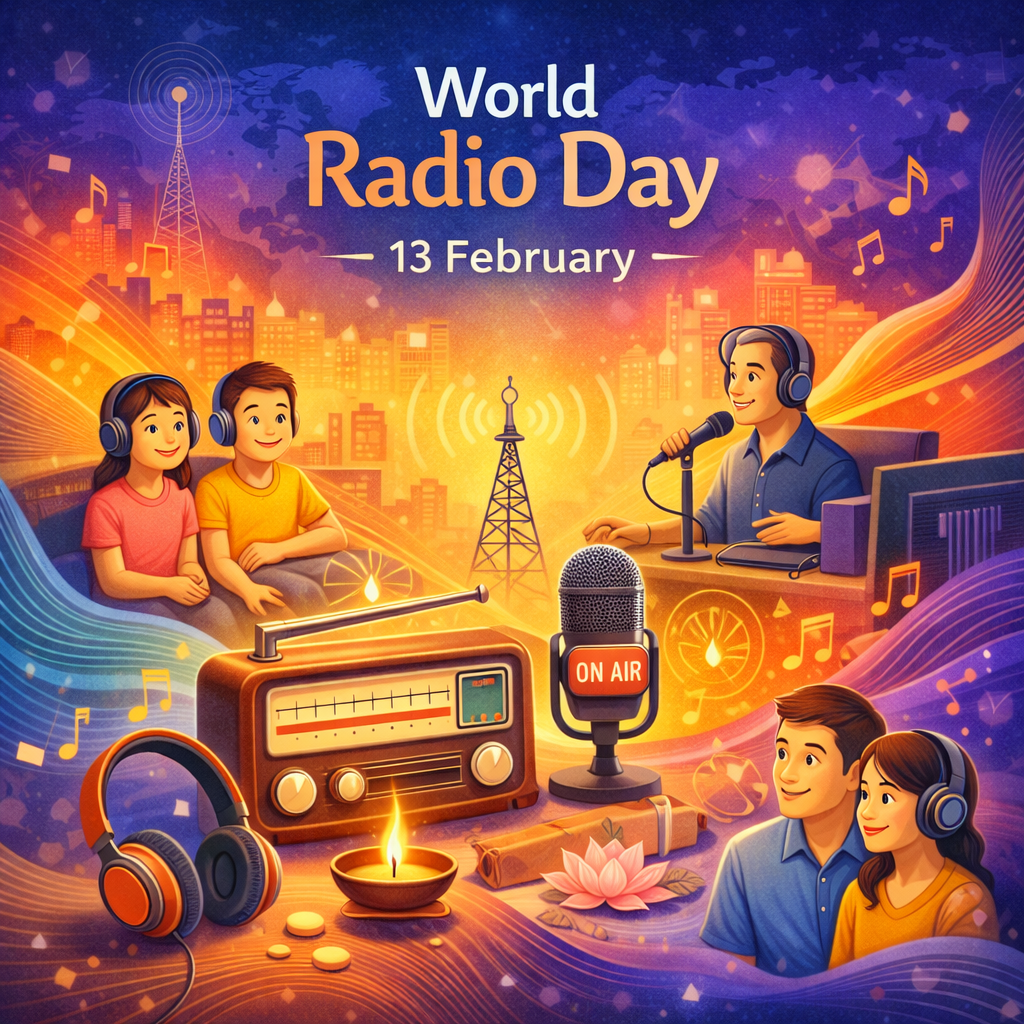
In 2026, World Radio Day takes on renewed importance with a forward-looking theme that places technology, ethics, and trust at the centre of modern broadcasting.
World Radio Day 2026 Date and Overview
Event: World Radio Day
Date: 13 February 2026
Observed by: Countries worldwide
Declared by: UNESCO
World Radio Day 2026 celebrates how radio continues to evolve in the digital age while remaining one of the most accessible and trusted media platforms globally. From community radio stations to international broadcasters, radio plays a critical role in education, emergency communication, public awareness, and cultural exchange.
World Radio Day 2026 Theme: Radio and Artificial Intelligence
The World Radio Day 2026 theme is “Radio and Artificial Intelligence”, centred on the guiding idea: “AI is a tool, not a voice.”
This theme explores how artificial intelligence is reshaping radio broadcasting while reaffirming that human judgment, ethics, and creativity must remain at the core of journalism.
Key Focus Areas of the World Radio Day Theme 2026
1. Ethical Use of Artificial Intelligence in Radio
The World Radio Day 2026 theme strongly emphasises ethical AI adoption. Artificial intelligence is positioned as a support system for journalists, not a replacement. Editorial responsibility, fact-checking, and decision-making must continue to be led by humans to preserve credibility and public trust.
2. Innovation in Radio Broadcasting
AI is transforming radio production and distribution by:
Enhancing audio clarity and sound restoration
Automating transcription and translation for multilingual audiences
Supporting content discovery and personalised listening experiences
Improving accessibility for persons with disabilities
These innovations help radio stations reach wider audiences while maintaining high production standards.
3. Building Trust Between Radio and Communities
Trust remains radio’s greatest strength. The World Radio Day theme 2026 highlights how AI can:
Help verify information faster
Support responsible journalism
Strengthen engagement with local communities
By using AI transparently and responsibly, radio can deepen its bond with listeners rather than weaken it.
Why World Radio Day Matters in 2026
Even in an era dominated by social media and video platforms, radio remains the most widely consumed mass medium in the world. It reaches remote regions, disaster-affected areas, and underserved populations where internet access may be limited or unreliable.
World Radio Day 2026 reinforces the idea that:
Radio is free, accessible, and inclusive
It plays a vital role during emergencies and natural disasters
It supports democratic dialogue and freedom of expression
It adapts continuously to new technologies without losing its human voice
History and Background of World Radio Day
World Radio Day was officially proclaimed in 2011 and first celebrated globally in 2012. The date 13 February marks the establishment of United Nations Radio in 1946.
Since its inception, World Radio Day has aimed to:
Celebrate radio as a medium
Improve international cooperation among broadcasters
Encourage access to information through radio
Over the years, each edition has focused on a theme reflecting global challenges and technological changes, making World Radio Day 2026 part of a long tradition of relevance and adaptation.
The Role of Technology and Digital Radio
Modern radio is no longer limited to traditional FM or AM frequencies. Digital radio technologies have expanded radio’s capabilities by:
Enabling clearer sound quality
Supporting emergency warning systems
Allowing seamless access across devices such as phones, cars, and smart speakers
In the context of World Radio Day 2026, artificial intelligence works alongside digital radio technologies to make broadcasting more resilient, responsive, and future-ready.
World Radio Day and the Future of Broadcasting
The message of World Radio Day 2026 is not about replacing broadcasters with machines. Instead, it promotes a balanced future where:
AI enhances efficiency and reach
Journalists retain editorial independence
Communities remain at the heart of radio
By treating AI as a tool rather than a voice, radio can continue to serve the public interest while embracing innovation responsibly.
How World Radio Day Is Celebrated
Across the world, World Radio Day is marked through:
Special radio programmes and panel discussions
Community outreach and educational broadcasts
Workshops on media ethics and innovation
International collaborations between radio stations
These activities encourage broadcasters, policymakers, students, and the public to reflect on radio’s evolving role in society.
Key Points For World Radio Day
Celebrated annually on 13 February
Declared by UNESCO
Highlights the social value of radio
Focuses on AI as a supportive tool in 2026
Promotes ethical journalism and innovation
Conclusion: World Radio Day 2026 and Its Global Message
World Radio Day 2026 reaffirms radio’s unique position in the media landscape—a medium that continues to evolve with technology while staying deeply human at its core. With the theme “Radio and Artificial Intelligence,” this year’s observance, led globally by UNESCO, highlights innovation, ethics, and trust as the foundations of responsible and modern broadcasting.
As the world comes together to celebrate World Radio Day on 13 February 2026, the message is clear: technology should empower voices, not replace them—and radio remains a powerful, inclusive voice for communities across generations.
Echoing this balance between technology and human connection, Vedantu believes that innovation in education should strengthen understanding, curiosity, and real learning rather than replace the human element of teaching. By combining smart technology with expert educators, Vedantu continues to support meaningful learning experiences that truly benefit students and families.
Warm wishes on World Radio Day 2026 from Vedantu—celebrating voices, knowledge, and technology that connect, educate, and inspire. 🎧📚
FAQs on World Radio Day 2026: Theme, Significance, History, and the Role of AI in Radio
1. What is World Radio Day?
World Radio Day is an international observance celebrated every year on 13 February to recognise radio as a powerful medium for communication, education, and public awareness worldwide.
2. When is World Radio Day 2026 celebrated?
World Radio Day 2026 is celebrated on 13 February 2026, marking the anniversary of the establishment of United Nations Radio.
3. Who declared World Radio Day?
World Radio Day was declared by UNESCO in 2011 and later adopted by the United Nations General Assembly.
4. What is the World Radio Day 2026 theme?
The World Radio Day 2026 theme is “Radio and Artificial Intelligence”, focusing on how AI supports radio production, distribution, and journalism without replacing human voices.
5. What does the slogan “AI is a tool, not a voice” mean?
The slogan highlights that artificial intelligence should assist broadcasters and journalists while human judgment, ethics, and creativity remain central to radio communication.
6. How is artificial intelligence used in radio broadcasting?
AI is used in radio broadcasting to:
Improve audio quality
Support transcription and translation
Enhance accessibility
Personalise content delivery
Assist in content archiving and analysis
7. Why is radio still important in the digital age?
Radio remains important because it is free, accessible, trusted, and capable of reaching remote and underserved communities, especially during emergencies.
8. Why is World Radio Day significant globally?
World Radio Day highlights radio’s role in:
Strengthening democracy
Supporting freedom of expression
Delivering reliable information
Connecting communities worldwide
9. How is World Radio Day celebrated?
World Radio Day is celebrated through special broadcasts, panel discussions, educational programmes, community events, and international collaborations among radio stations.



