



What Are Easy Diwali Paper Crafts for Kids?
Easy Diwali paper crafts include folded lanterns, paper diyas, flower torans, greeting cards and colourful window decorations. They allow children to participate in the Festival of Lights using inexpensive materials and supervised creative activities. For 2026, the main Diwali date is 8 November.
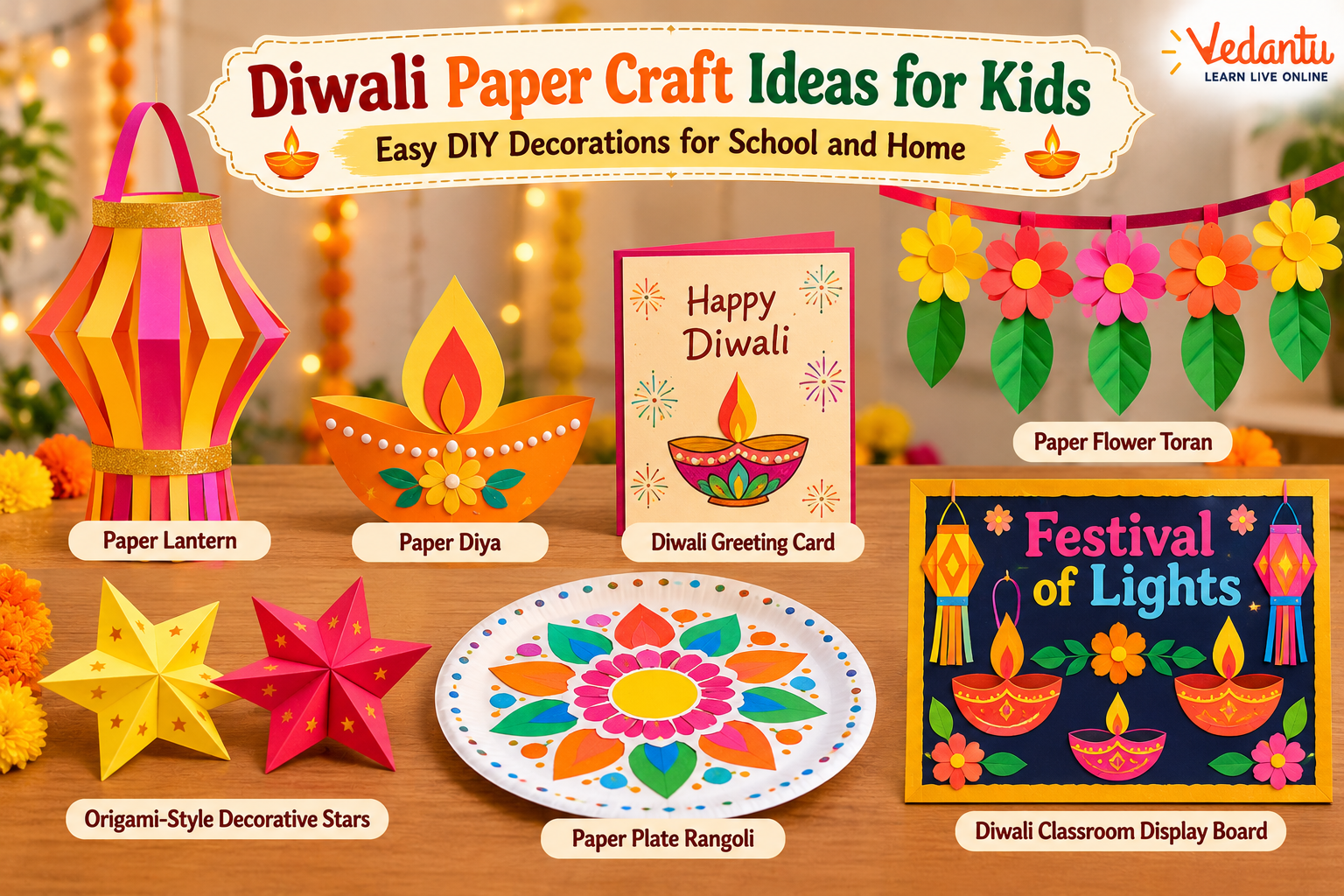
Materials Needed for DIY Diwali Crafts
Keep coloured paper, recycled cardboard, glue, pencils, child-safe scissors, a ruler, string and crayons ready. Optional items include stickers and battery-powered LED lights. Never place a lit candle inside a paper lantern.
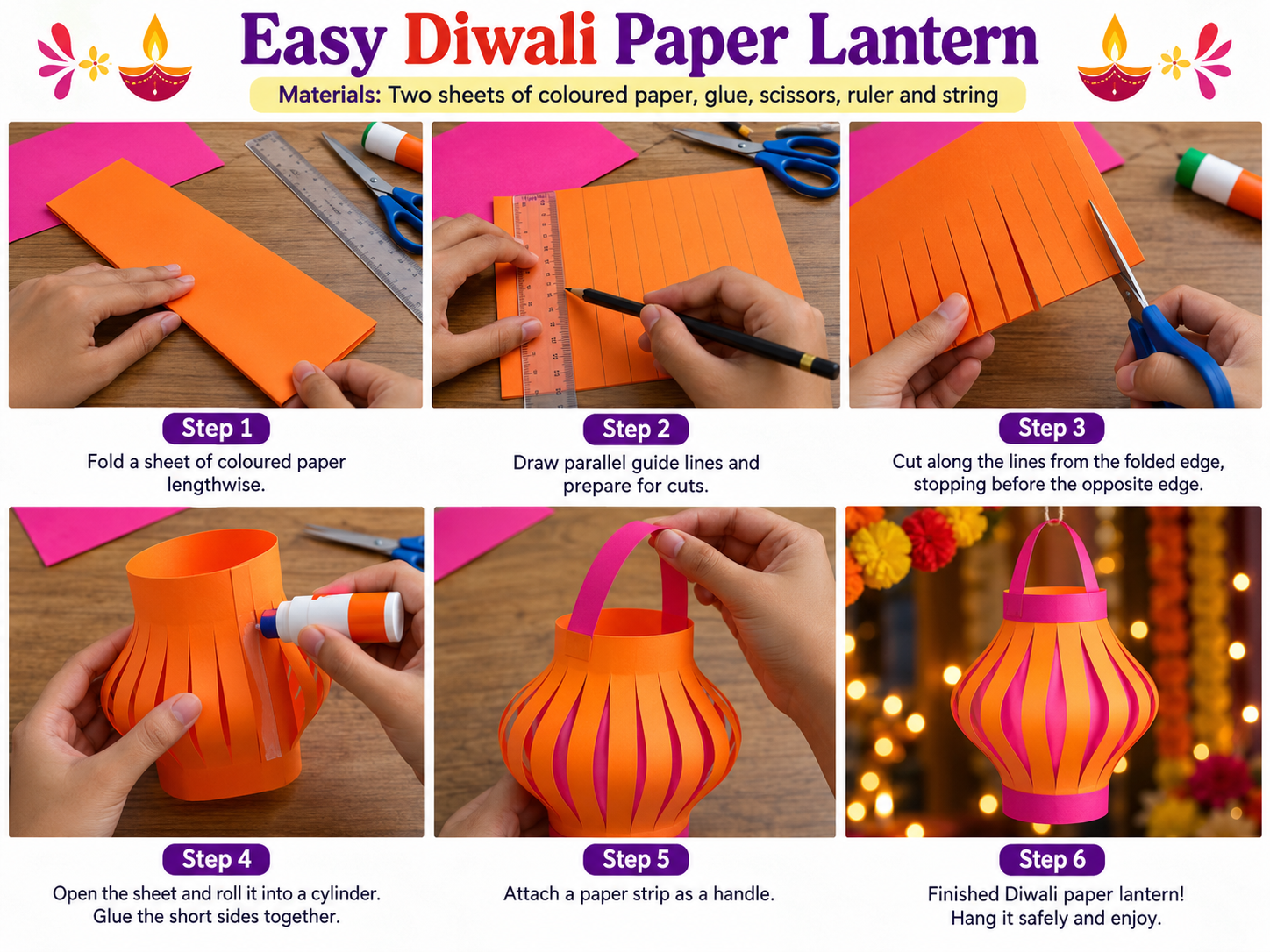
1. Easy Diwali Paper Lantern
Materials: Two sheets of coloured paper, glue, scissors, ruler and string.
Fold one sheet lengthwise.
Draw parallel cuts from the folded edge, stopping before the opposite edge.
Cut the marked slits with adult supervision.
Open the sheet, roll it into a cylinder and glue its short sides.
Add a paper strip as a handle.
Hang securely, away from heat and electrical hazards.
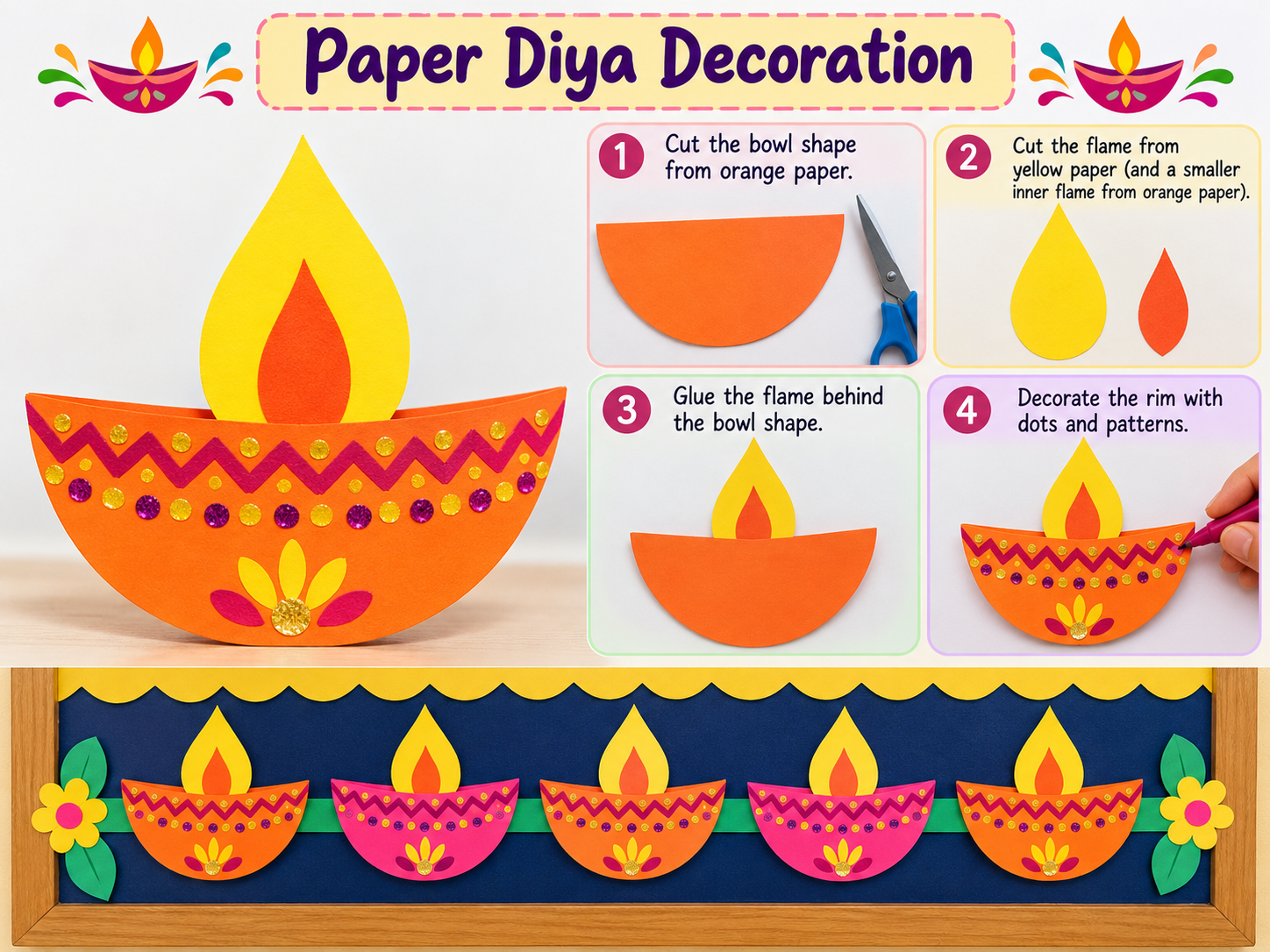
2. Paper Diya Decoration
Cut a wide bowl shape from orange paper and a flame from yellow paper. Glue the flame behind the bowl. Add a contrasting inner flame and decorate the rim with dots or patterns. Attach to a school noticeboard, or use several paper diyas as a wall border.
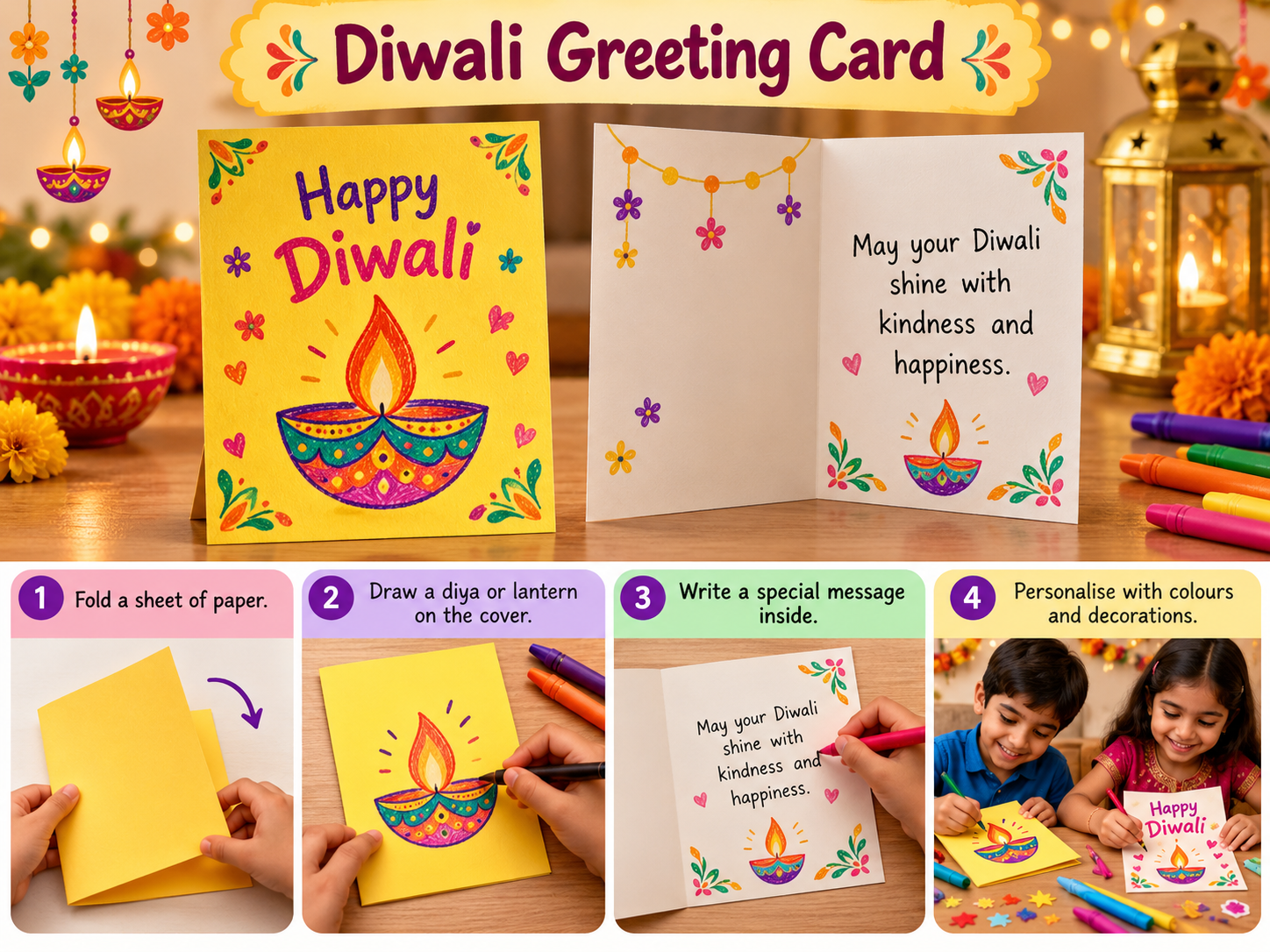
3. Diwali Greeting Card
Fold sturdy paper into a card. Draw a diya or lantern on the cover and write a short message inside: “May your Diwali shine with kindness and happiness.” Invite children to personalise the card for family or teachers.
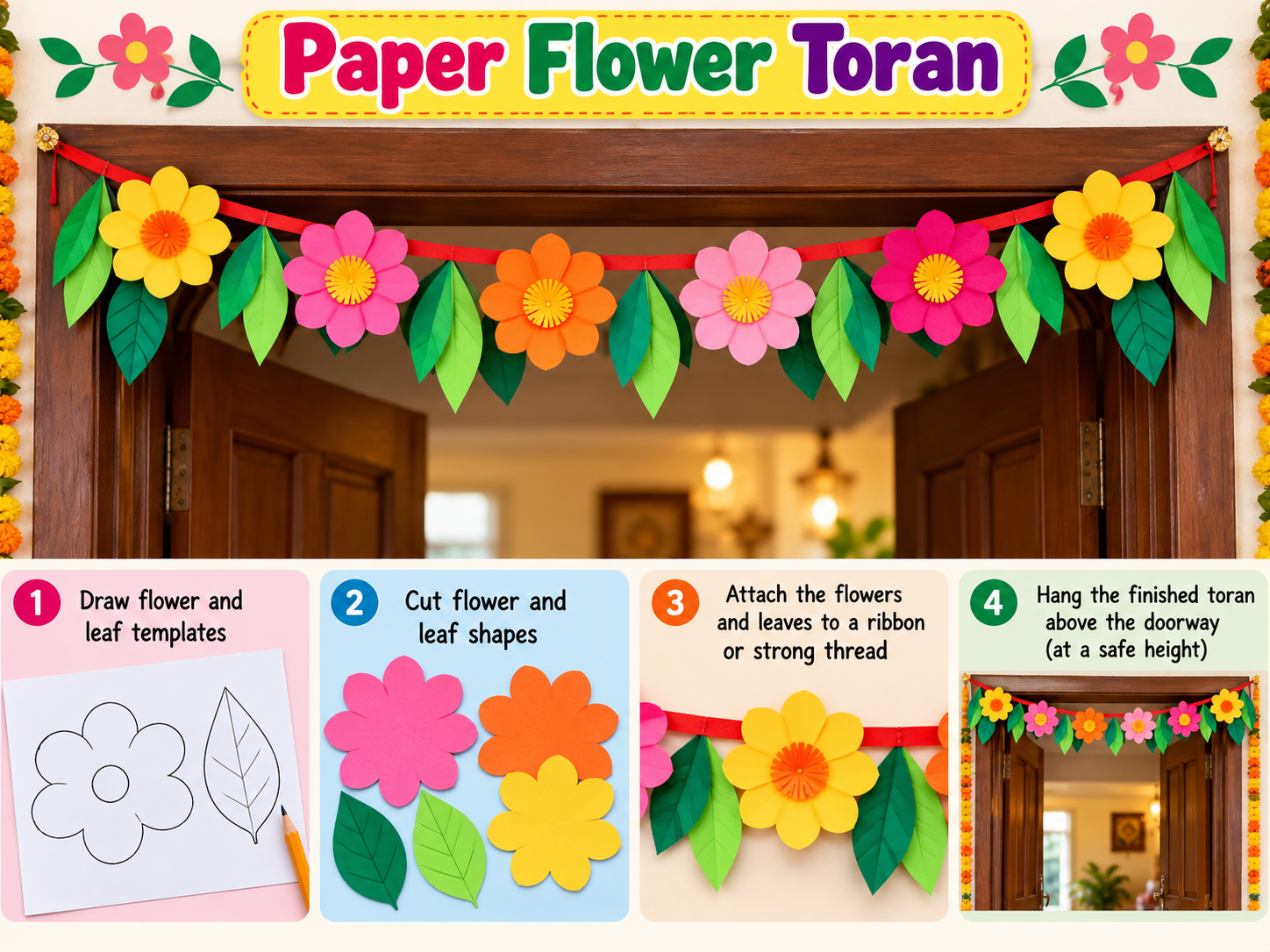
4. Paper Flower Toran
Draw and cut multiple flower shapes using a template. Add leaves from green paper. Attach each shape to a ribbon or strong thread and hang above a doorway at a safe height. Make sure the hanging does not block doors or ventilation.
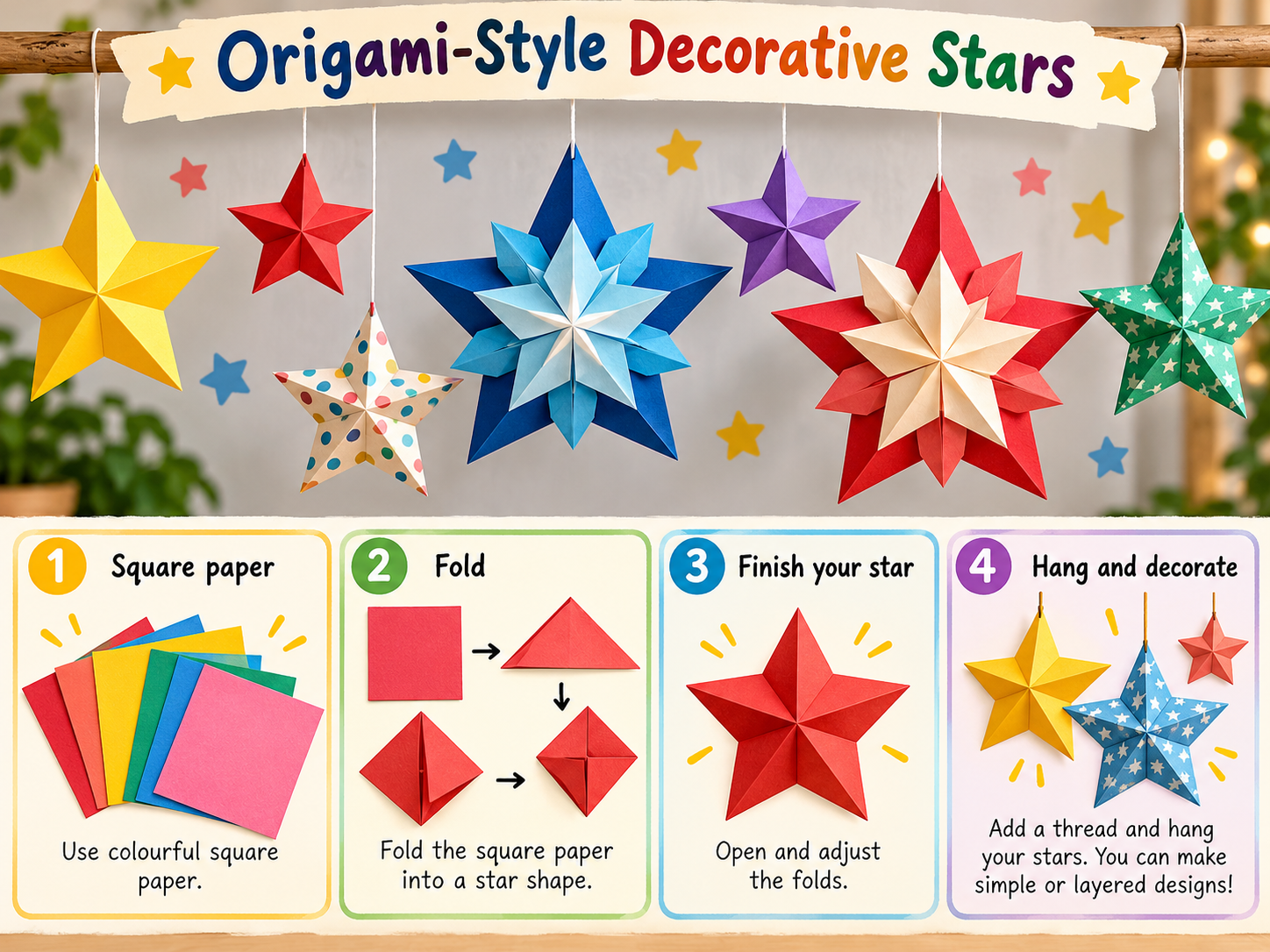
5. Origami-Style Decorative Stars
Fold square paper into simple stars or layered patterns. Use contrasting colours and hang the stars at different heights. Choose age-appropriate folds; younger children can use pre-cut templates.
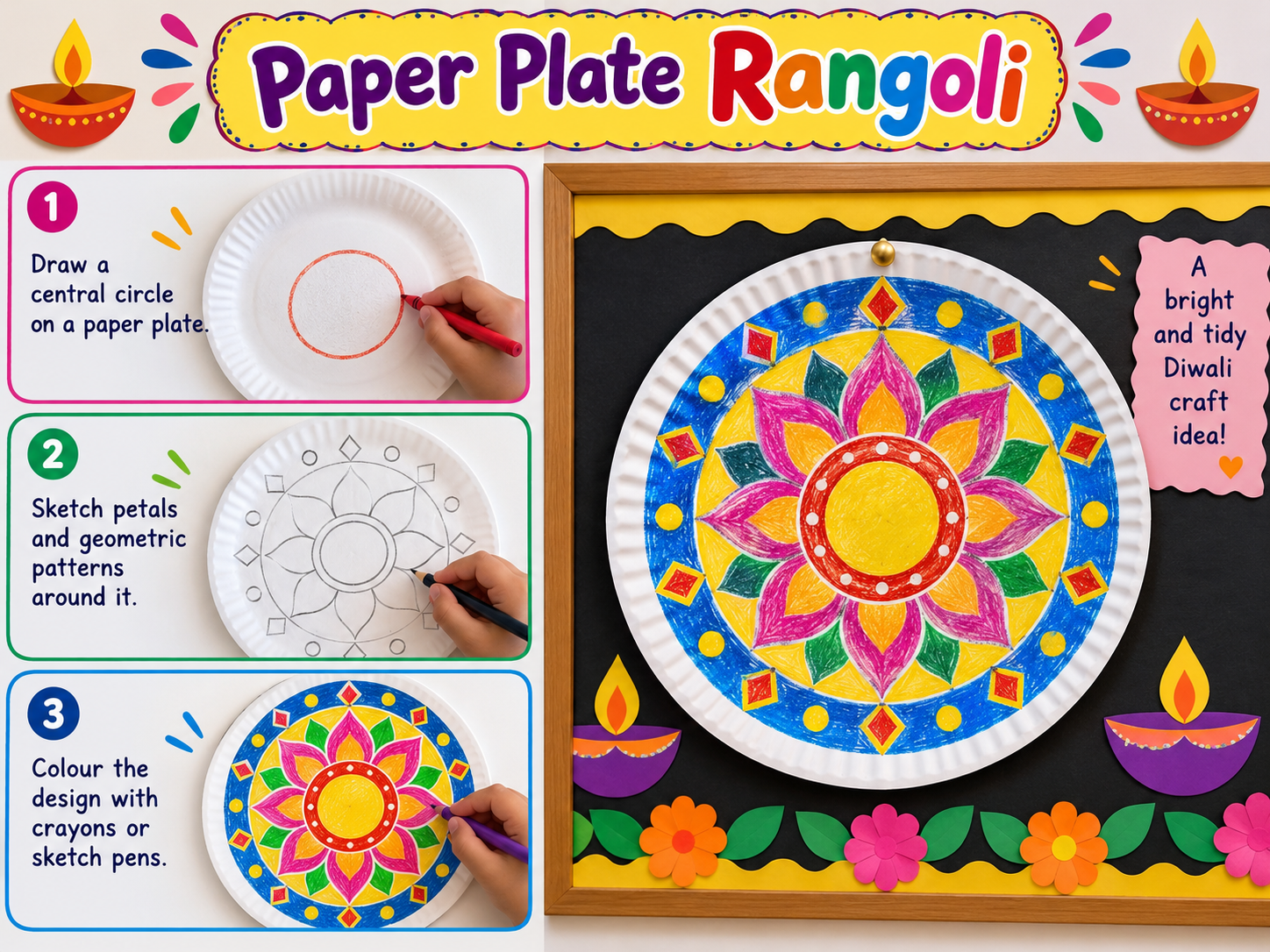
6. Paper Plate Rangoli
Draw a central circle and surround it with petals or geometric patterns on a clean paper plate. Colour with crayons. This is a tidy school alternative to loose rangoli powder and can be displayed on a noticeboard. For floor designs, see Diwali rangoli patterns.
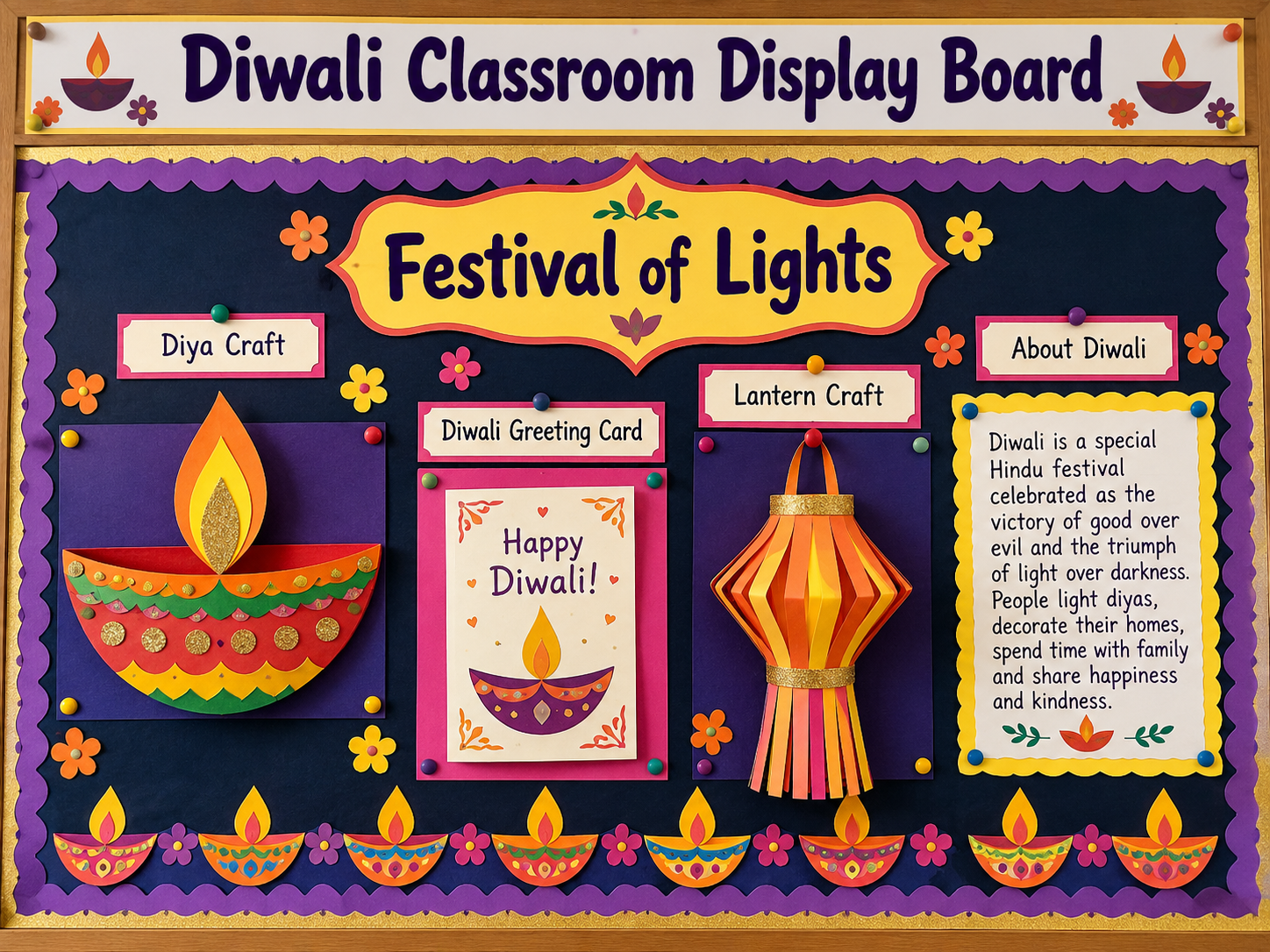
7. Diwali Classroom Display Board
Assign groups to create a diya, a lantern, a card and a short description of Diwali's significance. Combine the pieces on a board with a single headline such as “Festival of Lights.” Avoid crowded text and keep all pieces safely attached.
Diwali Crafts by Age Group
Eco-Friendly Paper Craft Tips
Use leftover clean paper, reuse ribbon and store crafts for next year where possible. Avoid unnecessary glitter, plastic gems and disposable materials. See green Diwali celebration tips for broader ideas.
How to Display Diwali Paper Crafts Safely
Keep decorations away from flames, heaters and hot bulbs. Do not hang them across exits or at heights children cannot reach safely. Battery-powered lighting may be used if the product is suitable and securely installed.
Materials Checklist for Diwali Paper Crafts
A basic kit needs coloured paper, cardboard, a pencil, a ruler, glue, safety scissors and string. Reuse clean packaging where appropriate, but avoid materials that are dirty, sharp or difficult to cut. Younger students should receive pre-cut shapes or work with adult help. Keep a tray for paper scraps so the table stays organised and reusable offcuts are not lost.
Choose LED lights for paper decorations; a candle or burning diya must never be placed inside a paper lantern. Finished crafts should also be hung away from fans, heaters and exposed electrical fittings.
DIY Paper Diya: Complete Steps
Draw a semicircle for the diya bowl on thick coloured paper and cut it out. Cut a slightly smaller oval for the rim and one large teardrop for the flame. Glue the rim near the top edge of the bowl and place the flame behind it. Add a smaller yellow flame inside an orange shape to create contrast. Finally, decorate the bowl with dots or small triangles.
For a classroom wall display, make several diyas using the same template but different colours. Photograph the template, the separate pieces and the completed diya so children can repeat the project independently with supervision.
Accordion Paper Lantern for Diwali
Fold one sheet lengthwise and mark parallel lines from the folded edge, stopping before reaching the opposite side. An adult can help younger children cut along the marks. Open the sheet, roll it into a cylinder and secure the short edges with glue or tape. Add a handle made from a narrow paper strip. Hang the lantern so it does not obstruct a doorway or touch electrical lighting.
Use an LED decoration nearby if illumination is desired. A paper lantern is not safe for a candle, oil lamp or other open flame.
Create a Reusable Festival Banner
Cut triangles or small flag shapes from sturdy scrap paper. Students can write short words such as “Light,” “Hope,” “Kindness” and “Togetherness” on separate pieces. Attach them to a string with tape or a hole punch and hang them on a classroom wall. Use larger letters and consistent spacing so the banner can be read from across the room.
After the event, fold the banner carefully and store it for next year. The activity gives students a chance to practise lettering, pattern repetition and cooperation.
Paper Flower Toran for a Doorway
Trace five-petal flowers on coloured paper, cut them out and make a small hole in the top of each shape. Alternate flowers with paper leaves on a string. Keep the garland light so it can be attached securely. For a fuller look, glue two slightly different flower sizes together. Do not hang it close to a diya or in a place where it could fall on a flame.
Older students can experiment with repeating colour sequences. Younger students can practise sorting flower shapes by size before assembling the garland.
A Diwali Craft Activity by Age Group
For Classes 1–2, use ready-made shapes for a paper diya collage. For Classes 3–5, try lanterns or folded greeting cards with guided cutting. For Classes 6–8, students can design a toran, layered paper rangoli or a small shadow box using LED light. Older students can develop templates for younger classes or calculate how much paper can be saved through careful layout.
Each activity should be adapted to available tools and supervision. Teachers can evaluate planning, neatness and creativity rather than rewarding expensive materials.
What Makes a Craft Pollution-Free?
No craft is completely impact-free, because materials still need to be produced and eventually disposed of. A lower-waste approach uses clean scrap paper, reusable templates, non-toxic classroom supplies where feasible and decorations that can be stored. Avoid loose plastic glitter and unnecessary packaging. Save larger paper offcuts for future projects and follow local recycling guidance.

This practical approach explains what “pollution-free paper crafts” means without making unsupported environmental claims. For additional ideas about responsible celebrations, connect readers to the green Diwali page.
Conclusion
Diwali crafts give children a creative way to help decorate homes and classrooms. Start with simple materials, supervise cutting and keep paper away from flames.
FAQs on Diwali Paper Craft Ideas for Kids: Easy DIY Decorations for School and Home
1. What is the easiest Diwali craft for kids?
A paper diya or folded greeting card.
2. How do you make a paper lantern for Diwali?
Fold, cut evenly spaced slits, open, roll into a cylinder and attach a handle.
3. Which craft is good for a school Diwali activity?
Paper-plate rangoli or a collective classroom display board.
4. Are paper lanterns safe with candles?
No. Use them without flames; a suitable LED light is safer.
5. How can we make Diwali crafts from waste material?
Reuse clean paper, cardboard and ribbons from existing supplies.
6. What is a simple Diwali paper decoration for a door?
A flower-and-leaf paper toran.


