



Shivaji Maharaj’s Struggles, Disputes, History and Alliances
Chhatrapati Shivaji Maharaj was one of the most courageous, progressive, and rational rulers in Indian history. He firmly upheld the ideals of Swarajya, justice, and Maratha pride, laying the foundation of the Maratha Empire in western India during the 17th century.
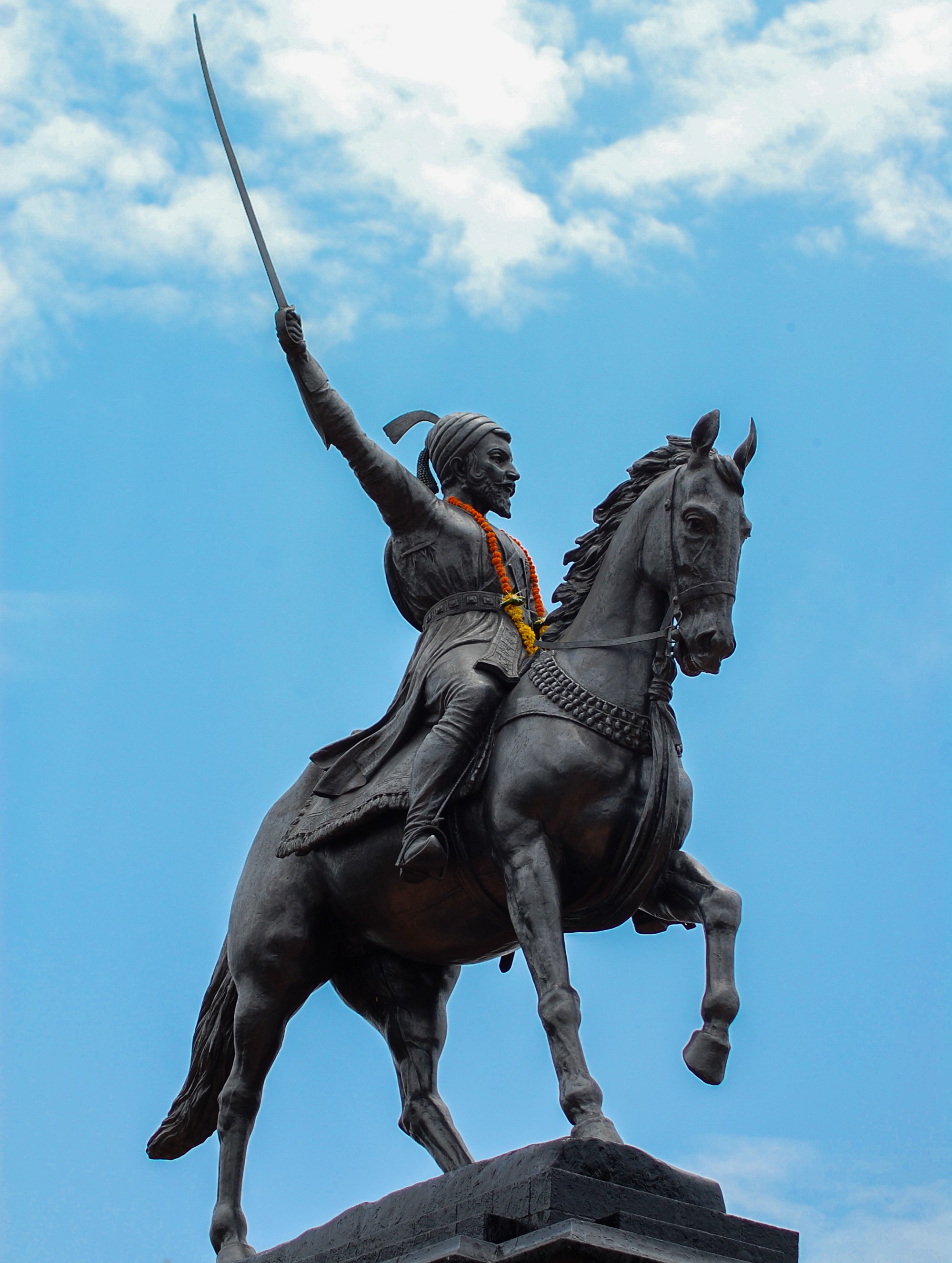
Widely regarded as one of the most formidable warriors of his era, Shivaji Maharaj combined brilliant military strategy, strong determination, and exceptional administrative skills. These qualities enabled him to establish a powerful kingdom by challenging the declining Adilshahi Sultanate of Bijapur. He is especially remembered for his innovative guerrilla warfare tactics, which helped him successfully confront the Mughal Empire and steadily expand Maratha territory.
Also Read: Find Out About Shivaji Maharaj’s War Tactics
The Impact of Chhatrapati Shivaji Maharaj on the Maratha Empire
Beyond his military achievements, Shivaji Maharaj introduced a progressive and people-centric administration. In 1674, he was formally crowned as the sovereign ruler at Raigad Fort, marking the rise of an independent Maratha state. Belonging to the Bhonsle Maratha clan, he is also honoured as the Father of the Indian Navy for recognising the strategic importance of a strong naval force to protect Maharashtra’s coastline.
Shivaji Maharaj strictly opposed injustice, harassment, and violence against women. Any violation of women’s dignity within his kingdom was met with severe punishment, reflecting his commitment to ethical governance and social justice.
In this blog, you will learn about different aspects of his life. Let’s take a quick and structured look at Chhatrapati Shivaji Maharaj’s history.
Who Was Shivaji Maharaj? Childhood and Early Life
When was Shivaji Maharaj born?
Shivaji Maharaj was born on 19 February 1630 at Shivneri Fort, near Junnar in present-day Pune district. He was the son of Shahaji Bhosale, a prominent Maratha commander serving the Bijapur Sultanate, and Jijabai, a deeply religious and principled woman, daughter of Lakhujirao Jadhav of Sindkhed.
Jijabai played a crucial role in shaping Shivaji Maharaj’s character. From an early age, she instilled in him a strong sense of justice, morality, and devotion, narrating stories from Indian epics that inspired courage and righteousness.
Education and Early Leadership
Shivaji Maharaj spent much of his childhood in Pune, where he received formal education under the guidance of a council of learned officials, including the Peshwa, Mazumdar, Sabnis, Dabir, and a chief teacher. He also received extensive training in military tactics, horse riding, sword fighting, and guerrilla warfare from experienced commanders like Kanhoji Jedhe and Baji Pasalkar.
In 1640, Shivaji Maharaj married Saibai Nimbalkar. By his teenage years, he had already formed a loyal group of followers from the Maval region, who later became the backbone of his early military successes. The Shivaji Maharaj Maratha Empire map highlights the vast territories he unified through strategic conquests and alliances.
Shivaji Maharaj’s Struggles with the Bijapur Sultanate
By 1645, Shivaji Maharaj had captured several key forts around Pune from the Bijapur Sultanate, including Torna, Chakan, Kondana, Sinhagad, and Purandar. These growing victories alarmed Mohammad Adil Shah, who imprisoned Shahaji in 1648 to restrain Shivaji’s expansion.
After Shahaji’s release and eventual death, Shivaji Maharaj resumed his campaigns. He seized the Javali valley from Chandrarao More, further strengthening his position. To suppress him, Adil Shah sent Afzal Khan, leading to the historic Battle of Pratapgarh (1659). Shivaji Maharaj tactically defeated Afzal Khan, resulting in a decisive Maratha victory.
Subsequent attempts by Bijapur generals, including Rustam Zaman, also failed, reinforcing Shivaji Maharaj’s dominance in the region.
Shivaji Maharaj’s Conflict with the Mughal Empire
As Maratha forces began raiding Mughal territories near Ahmednagar and Junnar, Mughal emperor Aurangzeb responded by appointing Shaista Khan as Deccan governor. Despite Shaista Khan’s massive army, Shivaji Maharaj executed a daring night attack in Pune, forcing the Mughal forces to retreat.
Later, Aurangzeb sent Jai Singh I with a large force, leading to the Treaty of Purandar (1665). Though Shivaji temporarily ceded some forts, he soon regained strength and continued his campaign for Swarajya.
Shivaji Maharaj: Rise of an Independent Sovereign
In 1674, Shivaji Maharaj was crowned Chhatrapati at Raigad Fort, formally establishing the Maratha Empire. A devout Hindu, he upheld religious tolerance, protected places of worship of all faiths, and employed people from diverse communities in his administration.
He led successful southern expeditions, formed strategic alliances, and governed with the support of the Ashtapradhan council. Shivaji Maharaj passed away in 1680 at Raigad Fort, leaving behind a powerful legacy.
Shivaji Maharaj and the British
Initially, Shivaji Maharaj maintained cordial relations with the British. However, tensions rose when they supported the Bijapur Sultanate during the Panhala conflict (1660). In response, Shivaji attacked British trading posts in 1670, leading to prolonged disputes and failed negotiations.
Coronation and Expansion of Maratha Power
The coronation of June 1674 symbolised the revival of Hindu sovereignty in the Deccan. Shivaji Maharaj earned titles such as Chhatrapati, Haindava Dharmodhhaarak, and Shakakarta. After coronation, Maratha forces expanded across Khandesh, Bijapur, Karwar, Kolhapur, Janjira, and Belgaum.
Shivaji Maharaj’s Administration
Shivaji Maharaj established an efficient administrative system influenced by Deccan traditions. His Ashtapradhan council included:
Peshwa – Prime Minister
Mazumdar – Auditor
Panditrao – Religious Head
Dabir – Foreign Affairs
Senapati – Military Commander
Nyayadhish – Chief Justice
Mantri – Royal Chronicler
Sachiv – Correspondence Officer
How Did Shivaji Maharaj Die?
Shivaji Maharaj passed away on 3 April 1680, at the age of 52, at Raigad Fort due to illness. His death led to a brief succession dispute, after which Sambhaji Maharaj ascended the throne.
Decline of the Mughal Empire
The Mughal Empire began declining in the late 17th century due to prolonged wars, weak successors, administrative failures, and the rise of regional powers like the Marathas. European colonial expansion further weakened Mughal authority.
Summing Up
Chhatrapati Shivaji Maharaj was a visionary ruler, master strategist, and compassionate administrator. In less than four decades, he established a strong and resilient kingdom that reshaped Indian history. His legacy of leadership, justice, courage, and unity continues to inspire generations and remains a cornerstone of India’s cultural and political heritage.
His life reminds us that true leadership is built on knowledge, values, and the courage to do what is right—principles that are essential not only for nations, but also for shaping young minds.
Inspired by such timeless ideals, Vedantu is committed to delivering quality education that nurtures critical thinking, confidence, and character in students. By empowering learners with strong fundamentals and values-driven learning, Vedantu helps prepare the next generation to lead with integrity and purpose.
Respectful tributes and warm wishes on Shivaji Maharaj Jayanti from Vedantu—may his legacy continue to guide learners towards courage, wisdom, and excellence.
जय भवानी, जय शिवाजी!
FAQs on Chhatrapati Shivaji Maharaj: The Visionary Founder of the Maratha Empire
1. Who was Chhatrapati Shivaji Maharaj?
Chhatrapati Shivaji Maharaj was the founder of the Maratha Empire and one of India’s greatest warrior-kings. He is remembered for establishing Swarajya, his military brilliance, progressive administration, and commitment to justice.
2. When and where was Shivaji Maharaj born?
Shivaji Maharaj was born on 19 February 1630 at Shivneri Fort, near Junnar in present-day Pune district, Maharashtra.
3. Why is Shivaji Maharaj considered a great ruler?
Shivaji Maharaj is considered a great ruler due to his innovative warfare tactics, efficient administration, naval strength, religious tolerance, and strong focus on protecting the rights of his people, especially women.
4. What was the Maratha Empire founded by Shivaji Maharaj?
The Maratha Empire was founded by Shivaji Maharaj in the 17th century with Raigad as its capital. It later became one of the most powerful forces in Indian history, challenging Mughal dominance.
5. What were Shivaji Maharaj’s military strategies?
Shivaji Maharaj pioneered guerrilla warfare (Ganimi Kava), using speed, terrain knowledge, and surprise attacks to defeat much larger enemy armies.
6. When was Shivaji Maharaj crowned king?
Shivaji Maharaj was crowned as Chhatrapati on 6 June 1674 at Raigad Fort, officially establishing the Maratha Empire.
7. Why is Shivaji Maharaj called the Father of the Indian Navy?
He is called the Father of the Indian Navy because he recognized the importance of naval power and built a strong fleet to protect India’s western coastline.
8. How did Shivaji Maharaj die?
Shivaji Maharaj passed away on 3 April 1680 at Raigad Fort after a prolonged illness.
9. What is the legacy of Shivaji Maharaj today?
Shivaji Maharaj’s legacy lives on through his ideals of leadership, courage, justice, equality, and governance, inspiring generations across India.



