



Christmas 2026: What Is Christmas and Why Is It Celebrated?
Christmas 2026 will be celebrated on Friday, 25 December 2026, to commemorate the birth of Jesus Christ. It is an important Christian festival and a widely observed cultural holiday associated with love, hope, generosity and togetherness. In India, Christmas is a gazetted public holiday, with families and communities marking the occasion through prayers, festive traditions and gatherings.
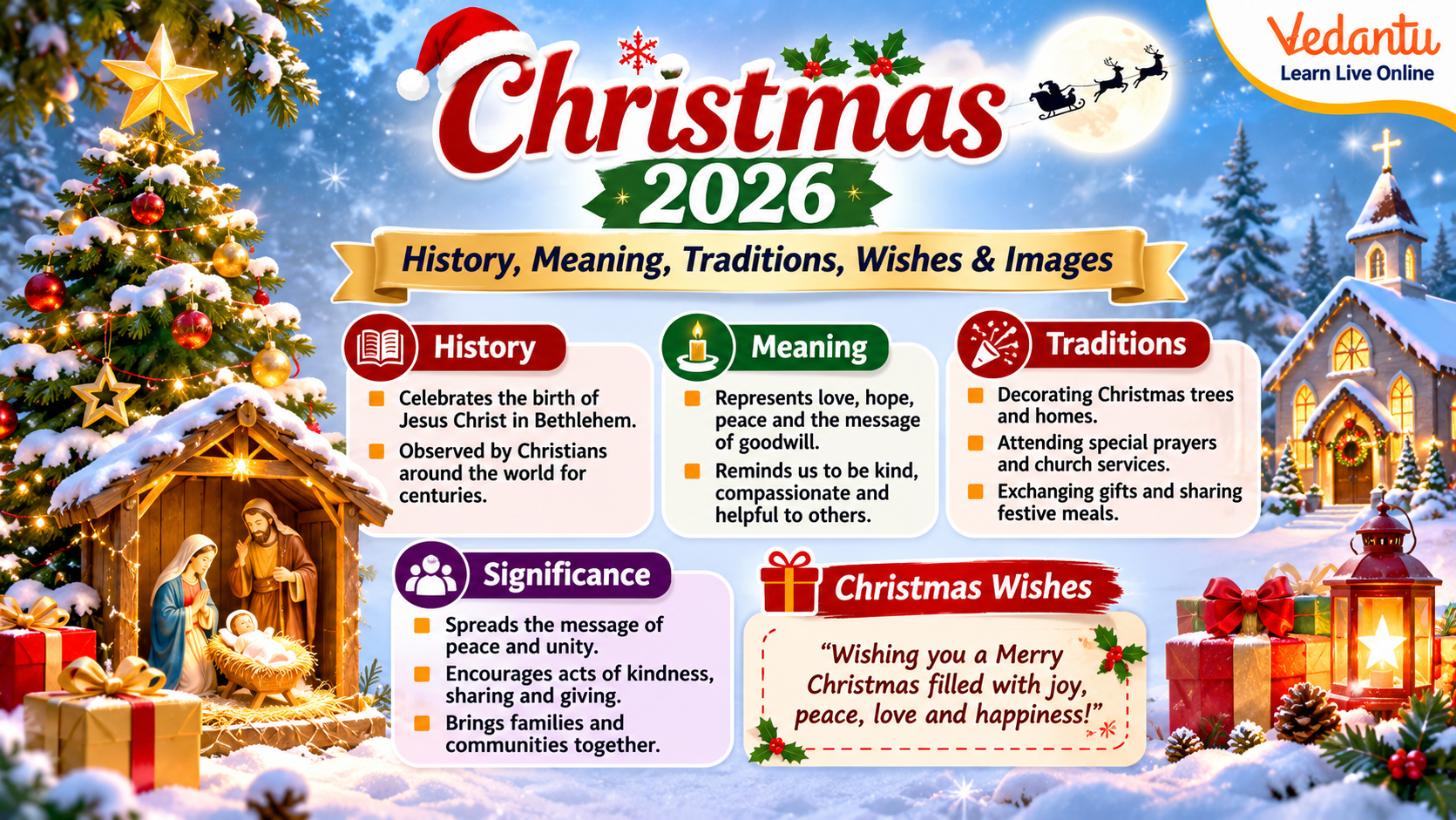
The history of Christmas dates back many centuries, bringing together Christian beliefs and customs that developed across different cultures. Today, people decorate Christmas trees, exchange gifts, prepare festive cakes and share Merry Christmas wishes with loved ones. Understanding the festival's origins helps students learn how religious and cultural traditions have changed over time.
Christmas 2026: Date and Key Facts
Some Christian churches follow different liturgical calendars and observe Christmas on 6 or 7 January.
History of Christmas: How Did the Festival Begin?
The history of Christmas begins with the Christian celebration of the birth of Jesus Christ. According to the New Testament, Jesus was born in Bethlehem to Mary, who was married to Joseph.
The Gospels of Matthew and Luke describe important events associated with his birth, including the visit of shepherds and the journey of the Magi, or wise men.
The Bible does not specify the exact date of Jesus's birth. By the fourth century, Christians in Rome were observing the birth of Jesus on 25 December.
Over time, Christmas spread across Europe and other parts of the world. Local customs, religious practices and family traditions gradually shaped the festival celebrated today.
Christmas History Timeline
Why Is Christmas Celebrated on 25 December?
The exact birthday of Jesus Christ is not known. However, 25 December became an established date for celebrating his birth in early Christian tradition.
Historians discuss two major explanations:
Christian calculations: Some early Christians associated Jesus's conception with 25 March. Nine months later is 25 December.
Roman winter festivals: The date falls close to ancient Roman winter celebrations, including traditions associated with the winter solstice and Sol Invictus.
Historians have not established a single conclusive explanation for the choice of date.
The English word Christmas comes from Christ's Mass, referring to Christian worship commemorating Jesus Christ.
What Is the Religious Meaning of Christmas?
For Christians, Christmas celebrates the birth of Jesus Christ, whom they believe to be the Son of God and the promised Messiah.
The Nativity story, described in the Gospels of Matthew and Luke, forms the religious foundation of the festival.
Christmas is also associated with the Christian season of Advent, a period of preparation before the festival, and Christmastide, the season following Christmas.
Beyond its religious meaning, Christmas has become a cultural occasion when many families express kindness, gratitude and goodwill.
History and Meaning of the Christmas Tree
The Christmas tree is one of the most recognisable symbols of the festival.
The modern custom of decorating evergreen trees developed in German-speaking regions of Europe. Records describe decorated trees in Strasbourg in the early 17th century.
Evergreen trees have been associated with life and endurance during winter. In Christian interpretations, they may symbolise hope and everlasting life.
The tradition became increasingly popular in Britain during the 19th century and spread widely to other countries.
What Do Christmas Tree Decorations Represent?
These meanings vary between communities, and many families now decorate trees mainly as a cultural tradition.
Christmas Decorations and Their Cultural Significance
Christmas decorations reflect a combination of religious symbolism, seasonal customs and family traditions.
Common decorations include stars, wreaths, bells, lights, stockings and nativity scenes.
In India, paper stars, lanterns and colourful lights are especially familiar decorations in many Christian households.
Students can make a Christmas decoration using paper, cardboard, reusable ribbons and other craft materials.
Why Do People Exchange Christmas Gifts?
The tradition of giving Christmas gifts developed through several religious and cultural influences.
In Christian tradition, the gifts presented by the Magi to Jesus are often associated with generosity. Gift-giving customs were also influenced by the stories of Saint Nicholas.
Over the centuries, exchanging presents became an important family tradition in many countries.
Christmas Gift Ideas for Family, Friends and Teachers
A meaningful Christmas gift does not need to be expensive. Students can create personalised presents that express appreciation and care.
History of Christmas Cake and Festive Food
The Christmas cake tradition developed from European festive food customs, including rich fruitcakes prepared with dried fruits, nuts and spices.
Different countries have their own Christmas desserts and meals.
In India, plum cakes, fruitcakes, cookies and regional sweets are commonly associated with the Christmas season.
Some families in Goa prepare traditional sweets such as neureos, while Kerala households may serve plum cake and regional festive dishes.
These foods reflect how Christmas traditions have adapted to local ingredients and cultural practices.
Christmas Card History and Christmas Greetings
The modern commercial Christmas card tradition began in Britain in 1843, when Sir Henry Cole commissioned a printed greeting card.
Christmas cards became increasingly popular as printing and postal services expanded.
Today, people exchange physical cards, digital messages and personalised photographs to send Christmas greetings to friends and family.
How to Make a Christmas Card
Fold a sheet of coloured paper or cardboard.
Draw a Christmas tree, star, bell or festive scene.
Write a short greeting on the front.
Add a personal message inside.
Decorate the card with reusable craft materials.
A handmade card can be a thoughtful way for students to share Christmas wishes.
Merry Christmas 2026: Wishes, Messages and Greetings
Merry Christmas 2026! Sharing warm messages is a simple way to celebrate the festive season and show appreciation for family and friends.
Merry Christmas Wishes for Family and Friends
Merry Christmas 2026! May your home be filled with love, laughter and beautiful memories.
Wishing you peace, good health and happiness throughout the Christmas season.
May Christmas bring warmth to your heart and wonderful moments to your family.
Sending heartfelt Christmas wishes for a season filled with hope and togetherness.
Merry Christmas! May kindness, joy and gratitude stay with you throughout the coming year.
Wishing you a wonderful Christmas surrounded by the people who make life special.
Happy Christmas Wishes and Short Messages
Happy Christmas! May your celebrations bring joy and peace to everyone around you.
Wishing you a cheerful Christmas and a year full of meaningful opportunities.
May this festive season inspire you to spread kindness and happiness.
Happy Christmas wishes to you and your loved ones. Enjoy a peaceful celebration!
Christmas Quotes and Captions
These original Christmas quotes are suitable for greeting cards, school displays and social media captions.
Christmas reminds us that kindness is a gift everyone can share.
The spirit of Christmas grows through generosity and togetherness.
A thoughtful gesture can make the festive season brighter.
Christmas is a time to celebrate hope, love and gratitude.
Every warm greeting adds happiness to the season.
Christmas Images, Photos and Background Ideas for 2026
Students can use Christmas images to create greeting cards, classroom displays and festive presentations.
Merry Christmas Images and Background Ideas
For Merry Christmas images, use clear text, attractive colours and a layout that remains readable on mobile screens.
A Christmas background can feature stars, snowflakes, bells or gentle light patterns without making the main text difficult to read.
Students should use their own photographs or properly licensed images when sharing designs publicly.
Easy Christmas Drawing and Christmas Tree Drawing Ideas
Christmas drawing activities help students explore festive symbols through creative artwork.
Christmas Drawing Ideas for Students
How to Make an Easy Christmas Tree Drawing
Draw a small star at the top of the page.
Add three overlapping triangular sections beneath the star.
Draw a short rectangular trunk.
Add small circles, bells and stars as ornaments.
Colour the tree green and decorate it with bright colours.
Students can add “Merry Christmas 2026” below their artwork to turn it into a greeting card.
Christmas Celebrations and Cultural Traditions Around the World
The Christmas celebration has developed different customs across countries and communities.
In Germany, traditional Christmas markets and decorated trees are popular. In the Philippines, extended church and family celebrations are important. In Mexico, Las Posadas takes place during the days leading up to Christmas.
In India, people may attend church services, prepare festive foods and decorate their homes with stars and lights.
For detailed information about 25 December celebrations, school activities and Christmas Day-specific wishes, read Vedantu's Christmas Day Celebration article.
Conclusion
Christmas 2026 will be celebrated on Friday, 25 December, continuing a festival with centuries of religious and cultural history. From the Nativity story to Christmas trees, greeting cards, cakes and gift-giving, the traditions associated with Christmas have developed across different countries and communities.
Learning about Christmas helps students understand its religious meaning, historical background and cultural importance. Whether sharing Merry Christmas wishes, creating drawings or learning about traditional customs, the season encourages kindness, gratitude and togetherness.
Related Articles
Christmas Eve – Learn about the traditions observed on 24 December.
Christmas Day Speech – Prepare speeches for school functions.
Christmas Stories – Explore stories about generosity, kindness and friendship.
Christmas Essay – Explore ideas for writing about the festival.
FAQs on Christmas 2026: History, Meaning, Traditions, Wishes & Images
1. When is Christmas in 2026?
Christmas 2026 falls on Friday, 25 December 2026. The date is observed annually in most Western Christian traditions. Some Eastern Christian churches follow different calendars and celebrate Christmas in January.
2. What is the history of Christmas?
Christmas developed as a Christian festival commemorating the birth of Jesus Christ. The earliest recorded observance on 25 December in Rome dates to 336 CE. Later, different cultural traditions became associated with the festival.
3. Why is Christmas celebrated on December 25?
December 25 became an established Christian date for commemorating Jesus's birth. Historians discuss early theological calculations and the influence of Roman winter celebrations, but the exact reason for selecting the date remains uncertain.
4. Who started the Christmas tree tradition?
The modern decorated Christmas tree tradition developed in German-speaking Europe. Records from the early 17th century describe decorated evergreen trees, and the custom became increasingly popular internationally during the 19th century.
5. How many days until Christmas 2026?
Christmas 2026 falls on 25 December. As of 19 November 2026, there are 36 days until Christmas. The number of days remaining decreases daily.
6. What are some popular Merry Christmas wishes?
Popular greetings include “Merry Christmas! Wishing you love, happiness and peace” and “May this Christmas bring joy, kindness and wonderful memories to your family.”
7. What are some easy Christmas gift ideas?
Thoughtful Christmas gift ideas include handmade cards, books, puzzles, photo frames, personalised bookmarks and small craft items. The best choice depends on the recipient's interests.
8. What can students draw for Christmas 2026?
Students can create a Christmas tree drawing, Santa Claus illustration, festive greeting card, Christmas background or Merry Christmas drawing with stars, bells and decorations.


