




Seed Germination Process and Factors Affecting It
Seed germination is the transformative process through which a dormant seed awakens to become a young plant. In simple terms, what is seed germination? It is the journey from a tiny seed to a vibrant seedling, and understanding the seed germination process is essential for both students and gardening enthusiasts alike.
What is Seed Germination?
Seed germination refers to the natural process by which a seed emerges from dormancy and begins to grow into a plant. This journey starts with the sprouting of any seed is the visible emergence of a radicle (the primary root), followed by the growth of a plumule (the shoot). During this process, the seed’s internal physiology becomes active as enzymes are initiated and the stored food is metabolised.
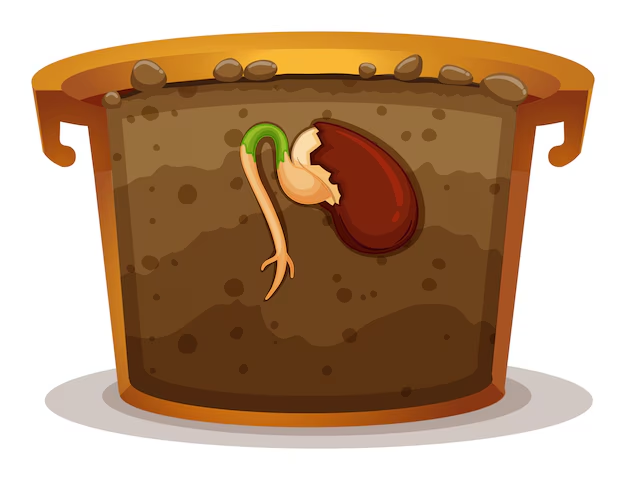
Imbibition: Rapid water uptake that softens the seed coat.
Activation: Enzyme activation and metabolic reawakening.
Emergence: The radicle breaks through, followed by the shoot.
Growth: The seedling establishes and continues to grow.
Also Read: Formation of Seed
The Seed Germination Process in Detail
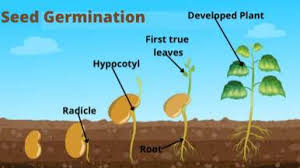
The seed germination process can be divided into distinct stages:
Imbibition:
When a seed comes into contact with water, it absorbs moisture rapidly. This hydration is crucial because it softens the seed coat, making it easier for the emerging root.
Why do seeds need water to germinate? Water acts as a solvent for essential nutrients and triggers the biochemical reactions necessary for growth.
Activation of Enzymes and Metabolic Processes:
As water permeates the seed, dormant enzymes become active. This stage marks the commencement of respiration and the conversion of stored food into energy.
This phase is vital as it sets the stage for cell elongation and division.
The emergence of the Radicle and Plumule:
The sprouting of any seed is symbolised by the radicle breaking through the softened seed coat. Soon after, the plumule (or shoot) begins to emerge.
A germination of seed diagram typically depicts this stage, showing how the radicle anchors the plant and the shoot grows upward in search of light.
Seedling Development:
Once the radicle is established, the seedling enters a period of rapid cell division and elongation. This growth phase eventually leads to the formation of leaves and the onset of photosynthesis.
Conditions and Factors Affecting Seed Germination
Successful seed germination depends on several key requirements:
Water: Water is critical because it softens the seed coat and activates enzymes. Many wonder, why do seeds need water to germinate? Simply put, water initiates the metabolic processes and nutrient mobilisation essential for growth.
Oxygen: Adequate oxygen is required for the vigorous respiration that fuels the seed germination process. Poor oxygen availability can hinder this process significantly.
Temperature: Most seeds require a moderate temperature—typically between 25°C and 30°C—for optimal germination. However, different seeds may have specific thermal needs.
Light or Darkness: Some seeds require exposure to light to trigger germination, while others germinate best in darkness. This environmental cue plays a vital role in the factors affecting seed germination.
Internal Factors:
Seed Dormancy: Some seeds possess dormancy mechanisms that delay germination until conditions are favourable.
Plant Hormones: Naturally occurring growth regulators can either inhibit or promote germination, adding an extra layer of complexity to the seed germination process.
Also Read: Dicotyledonous and Monocotyledonous Seed
In addition to the standard stages of seed germination, several unique aspects merit attention:
Enzymatic Control: Advanced research shows that the activation and inhibition of specific enzymes and hormones can determine the pace and success of germination.
Genetic Factors: Genetic predispositions influence not only the timing but also the robustness of the sprouting process.
Environmental Stressors: Conditions such as soil pH, nutrient availability, and microbial presence can subtly impact the factors affecting seed germination.
Fun Facts About Seed Germination
Tiny Beginnings: Some of the world’s largest trees begin their life from seeds so small that they could fit on a fingertip!
Dormancy Wonders: Certain seeds can remain dormant for decades until conditions are just right for germination.
Diverse Conditions: Seeds from desert plants have adapted to germinate rapidly after rare rainfalls, demonstrating nature’s remarkable resilience.
Real-World Applications
Understanding what is seed germination and its underlying processes has several practical applications:
Agriculture: Farmers utilise knowledge of the seed germination process to optimise crop yield by ensuring seeds are planted in ideal conditions.
Horticulture: Gardeners and botanists rely on controlled germination to cultivate ornamental plants and restore native flora.
Conservation: Seed banks and reforestation projects use germination techniques to revive endangered plant species.
Educational Tools: Germination of seed diagrams and interactive models are essential in biology classrooms to demonstrate plant growth.


FAQs on Seed Germination in Plants and Its Stages
1. What is seed germination?
Seed germination is the process by which a dormant seed resumes growth and develops into a new plant under suitable conditions. It begins when the seed absorbs water and ends with the emergence of the radicle (embryonic root).
- The seed takes in water through imbibition.
- Metabolic activities restart and enzymes become active.
- The radicle emerges first, followed by the plumule (shoot).
2. What are the conditions required for seed germination?
The main conditions required for seed germination are water, oxygen, and suitable temperature. These factors activate the embryo and support early growth.
- Water: Needed for imbibition and enzyme activation.
- Oxygen: Required for aerobic respiration to release energy.
- Temperature: Ensures optimal enzyme activity (varies by species).
3. What are the stages of seed germination?
The stages of seed germination include water absorption, activation of metabolism, and emergence of the embryo. These steps occur in a definite sequence.
- Imbibition: Seed absorbs water and swells.
- Enzyme activation: Stored food is broken down into usable nutrients.
- Radicle emergence: Primary root grows downward.
- Plumule growth: Shoot grows upward to form leaves.
4. What is the role of enzymes in seed germination?
Enzymes in seed germination break down stored food into simpler substances that the embryo can use for growth. Once water enters the seed, enzymes become active.
- Amylase converts starch into sugars.
- Proteases break proteins into amino acids.
- Lipases convert fats into fatty acids and glycerol.
5. What is the difference between epigeal and hypogeal germination?
The main difference between epigeal and hypogeal germination is the position of the cotyledons after germination. In epigeal germination, cotyledons come above the soil, while in hypogeal germination, they remain below the soil.
- Epigeal germination: Hypocotyl elongates; example – bean, castor.
- Hypogeal germination: Epicotyl elongates; example – pea, maize.
6. Why is water important for seed germination?
Water is essential for seed germination because it initiates imbibition and activates metabolic processes in the embryo. Without water, the seed remains dormant.
- Softens the seed coat.
- Activates enzymes for food breakdown.
- Facilitates transport of nutrients.
7. How does oxygen affect seed germination?
Oxygen is required for aerobic respiration during seed germination to produce energy in the form of ATP. The growing embryo needs continuous energy for cell division and elongation.
- Supports breakdown of glucose in mitochondria.
- Provides energy for root and shoot growth.
- Insufficient oxygen can slow or stop germination.
8. What is seed dormancy?
Seed dormancy is a temporary inactive state in which a viable seed does not germinate even under favorable conditions. It prevents germination during unsuitable environmental periods.
- May be due to a hard seed coat.
- Can result from immature embryo.
- Sometimes controlled by plant hormones like abscisic acid (ABA).
9. What is the function of the cotyledon during germination?
The cotyledon functions as a food storage and nutrient supply organ during early seed germination. It nourishes the developing embryo until it can perform photosynthesis.
- Stores starch, proteins, or fats.
- Transfers nutrients to the embryo.
- May become photosynthetic in epigeal germination.
10. How long does seed germination take?
The time required for seed germination varies by species but typically ranges from a few days to two weeks under optimal conditions. Environmental factors strongly influence the duration.
- Beans and mustard may germinate in 3–5 days.
- Maize and wheat usually germinate in 5–10 days.
- Temperature, moisture, and oxygen levels affect speed.



